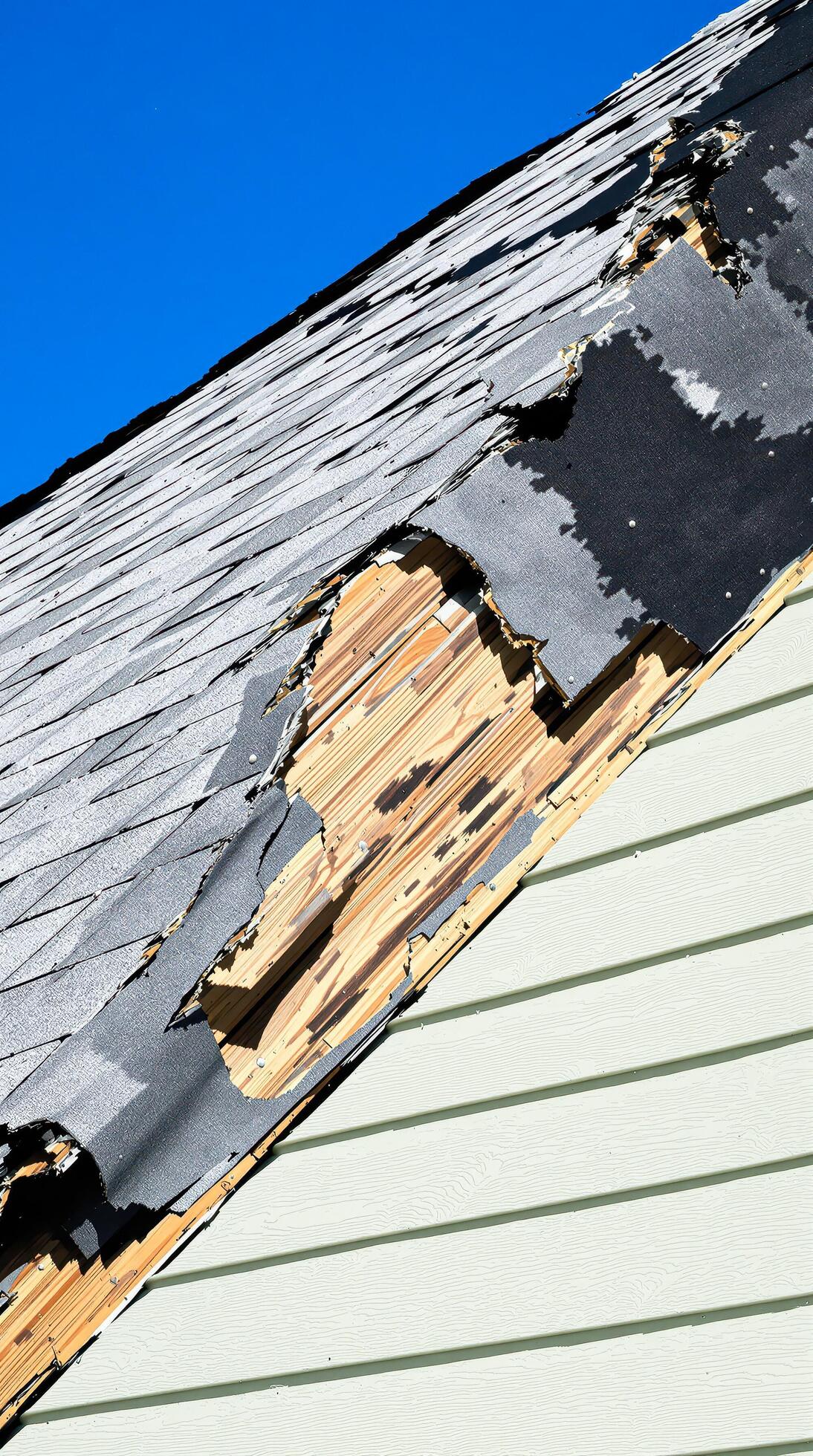
Hurricane season opens June first. Tropical systems start forming weeks earlier. If your Port Charlotte roof has weak points, you want to find them now while contractors have openings for renovations and materials ship on normal timelines.
Wait until a named storm enters the Gulf and you’re competing with everyone else who put this off. Prices spike and work gets rushed. The checklist below covers what to look at before that happens, starting with the items that matter most.
Edges Fail First, So We Start There
We always start by checking your shingle edges. Hurricane roof failures almost always begin at eaves and rakes where wind catches lifted material and peels it backward across the field. One loose corner can unzip an entire slope.
We walk around your house and look up at the starter courses running along every roof edge. We ;ook for curled corners, tabs lifting away from the surface, or gaps where shingles should lay flat. These spots released their factory adhesive from age, sun damage, or previous wind stress. Pressing them back down and re-sealing costs almost nothing. Waiting until wind-driven rain gets underneath and soaks your deck costs thousands.
Flashings and Penetrations Need a Closer Look
Every pipe, vent, and curb poking through your roof creates a potential entry point. The sealant holding these transitions together degrades over time. Rubber boots around plumbing vents crack and pull away from pipes. Metal flashings work loose where the roof meets the chimney or wall.
We check pipe boots for visible cracks or separation. We look at chimney and wall flashings for gaps or lifted edges catching sunlight underneath. Counter-flashings should overlap step flashings by at least two inches with no visible sealant failure. If anything looks questionable, we flag it for professional renovation before storm season arrives.
Clean Your Gutters Before They Become the Problem
This one you can handle yourself. Clogged gutters during hurricane rainfall overflow and send water cascading down fascia boards, behind siding, and into wall framing. The damage shows up months later as rot and mold you never connected to a storm.
Clear everything out. Check that downspouts discharge at least six feet from your foundation. While you’re up there on the ladder, look at how the gutters hang. Sagging sections hold standing water that overflows during heavy rain and pulls hangers loose from fascia. If you spot sag or soft spots in the fascia wood itself, that’s rot signaling bigger problems worth investigating before a storm tests the whole assembly.
Attic Ventilation Does Double Duty
Good ventilation keeps moisture from weakening your roof sheathing and growing mold in your attic. But during hurricanes, soffit intake vents also provide pressure relief that helps roofs resist uplift. Blocked vents from insulation, paint overspray, or decades of debris eliminate both benefits.
Next we climb into your attic tolook at whether the soffit baffles are clear. Daylight should be visible through intake vents from inside. Ridge vents only work when air can flow in from below, so any blockage at the soffits chokes the whole system. Having us add intake ventilation before storm season improves both roof lifespan and wind performance at once.
Build Your Insurance File Now
When we inspect your roof we give you time-stamped photos of your roof before storm season which can save you thousands in claim disputes later. Adjusters compare pre-storm and post-storm images to figure out what weather actually caused versus what already existed. Without baseline documentation, damage from a storm gets blamed on prior neglect, and coverage gets denied.
We photograph every slope, every penetration, every edge detail. This file protects your claim rights if damage occurs and prevents arguments about what was there before.
Book the Assessment While You Can
Contractor availability tightens as June approaches. Everyone who waited starts calling at once. Finishing repairs in April or May gives adhesives proper cure time, lets materials arrive without supply chain pressure, and ensures work gets the attention it deserves instead of the speed a packed schedule demands. Call PRG Roofing & Construction Inc. at (239) 237-2906 to schedule your pre-season inspection before the calendar takes that option away.