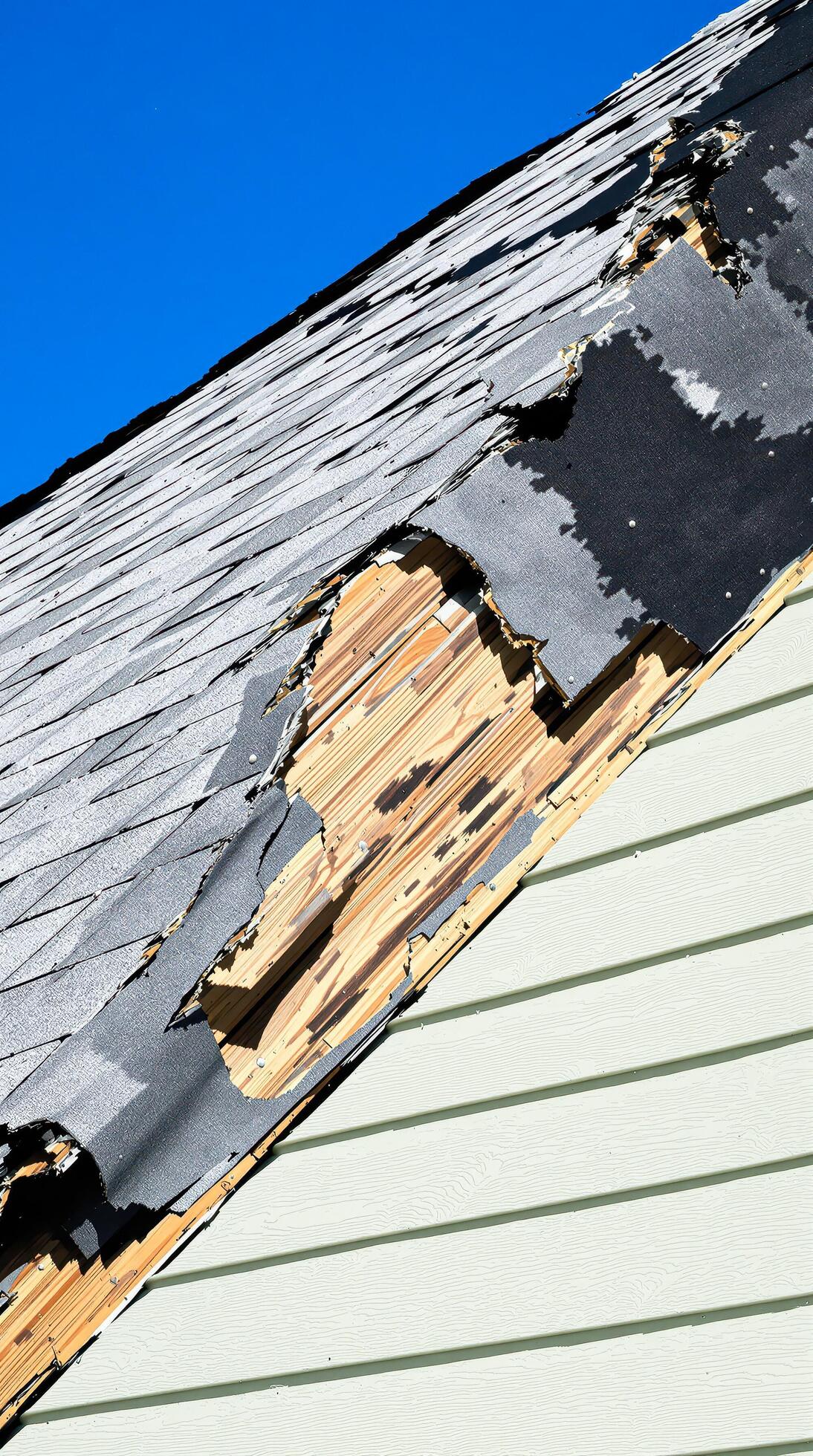
Port Charlotte, FL – How Long Residential Roofs Last Under Florida Codes

The number printed on your shingle packaging was tested in a lab somewhere with controlled humidity, no salt air, and zero hurricanes. Port Charlotte doesn’t offer any of those conditions. PRG Roofing & Construction Inc. serves Port Charlotte residents who want the honest gap between what manufacturers promise and what Florida’s coast delivers, because that gap is where the expensive surprises hide.
Every roofing material carries two lifespans, and only one of them matters for your planning. The first is the manufacturer’s rated range, built from accelerated weathering tests in a controlled facility. The second is the performance window that material will give you in Port Charlotte, where UV exposure, Gulf humidity, salt deposits, and storm cycles compound against every layer of your roof from the day it goes on.

What the Packaging Won’t Say
Three-tab asphalt shingles carry printed ratings between 15 and 25 years, but coastal Florida performance typically lands between 10 and 20 years depending on ventilation and attic moisture levels. Architectural shingles stretch that window slightly, holding between 15 and 25 years when the underlayment beneath them stays dry and the seal strips maintain their adhesive bond. Standing seam metal with a Kynar PVDF coating system offers the widest performance range at 40 to 70 years, and that spread exists because the coating quality and fastener engineering make or break the system’s resistance to salt corrosion. Each of these numbers drops further when ventilation can’t pull moisture out of the attic space, because trapped humidity cooks roofing materials from below while the sun works on them from above.

The Tile Roof Trap Nobody Talks About
Concrete and clay tile in Port Charlotte creates a specific blind spot that catches more residents off guard than any other material failure. The tile itself can last 25 to 50 years with its structural integrity intact. The problem sits underneath it. Modified bitumen or felt underlayment beneath tile roofing degrades through a process called oil migration, where sustained heat drives volatile oils out of the membrane material and leaves it brittle and cracked. That failure typically starts around the 15 to 20 year mark, and it lets rain water through even though the tile above looks flawless from every angle. You can’t identify this problem from the ground, and the first sign is often a ceiling stain that shouldn’t exist under what appears to be a perfect roof.

When Your Roof Becomes an Insurance Decision
Florida Statute 627.7011 draws a line at 15 years that converts your roof from a building component into a policy variable. Once your roof passes that age, your insurance carrier can choose not to renew your coverage unless a certified roof inspector confirms at least five years of remaining useful life. That statute doesn’t care whether your shingles look clean or your tile appears solid; it cares about documented condition. Managing your roof’s age and performance through scheduled inspections and documented evidence is what separates a renewable policy from a non-renewal letter that arrives at the worst possible time.

Why Measured Condition Beats Visual Appearance
We produce photo-documented asset reports for Port Charlotte residents that include moisture readings at penetration points, ventilation airflow measurements at the soffit and ridge, and seal strip adhesion checks on shingle roofs past the 10-year mark. Each report builds a one-year and three-year maintenance timeline with specific action items so you can plan around your roof’s condition instead of reacting to failures you didn’t anticipate. The difference between a roof that lasts and a roof that surprises you is documented data versus assumption.

The Budget You Can See Coming
If your Port Charlotte roof is approaching 10 years on asphalt or 15 years on tile, the performance window is narrowing whether you see visible problems or not. Call PRG Roofing & Construction Inc. at (239) 237-2906 for a residential roof asset inspection that gives you the documented condition, the maintenance timeline, and the insurance position you need to make your next decision with complete information instead of an estimate based on how things look from the driveway.


Naples, FL – Gutters and Splash Blocks Protect Residential Roof Foundations

\

That soft spot along your home’s foundation wall in Naples didn’t start at the ground. It started at the roofline, where your gutter system let rain water pool, back up, and carve a damage path downward through every layer between the fascia and the soil. PRG Roofing & Construction Inc. serves Naples residents who want to understand that path before it reaches the foundation, because by the time you see the evidence at ground level, the damage chain has been running for months.

Most residents think of gutters as a cleanup feature, something that keeps rain water from splashing off the roof edge onto the walkway. That framing misses what your gutter system is built to do. It’s the only component on your roof that plays offense, catching thousands of gallons per storm and routing them away from the structure’s perimeter. When it fails, nothing else on the building picks up the job.

Where the Failure Path Begins
A gutter that overflows during a Naples afternoon storm doesn’t just spill water over the front edge. Rain water backs up behind the gutter lip and wicks underneath the drip edge, where it saturates the fascia board first. Once that fascia absorbs enough moisture, the water reaches the rafter tails and the edge of your roof deck. From the deck edge, it migrates into the soffit cavity and down the wall framing. In Naples, where sandy soil drains laterally instead of absorbing water in place, that moisture spreads along your foundation perimeter rather than soaking straight down. Your home’s foundation takes the hit from a gutter problem that started two stories above it.

The Pitch Problem Nobody Measures
Debris clogs get all the blame for gutter failures, but incorrect pitch causes more damage over time because it’s invisible. A gutter that appears level to the eye can hold standing water in low sections that never drain to the downspout. Industry best practice calls for a minimum quarter-inch drop per 10 feet of gutter run, and we verify that measurement with a laser level on every installation and repair because visual leveling can’t catch the flat spots where standing moisture sits between storms. A level gutter does not hold water, and that’s the point.

What Happens at the Bracket and the Board
We fabricate seamless gutters on-site in Naples using a portable brake, which eliminates the mid-run joints where pre-cut sections meet and eventually separate under thermal expansion and storm debris pressure. Every hanger bracket gets sealed at the fastener point before it’s secured to prevent rain water from entering behind the gutter at the mounting location. Before any bracket goes onto the fascia, we take moisture readings with pin meters at each rafter tail; anything registering above 18% gets replaced with new material rather than covered over. Mounting a gutter system onto rotting fascia puts a new uniform on a player who can’t stay in the game.

Where the Downspout Meets the Sand
The end of your downspout is where the gutter system either finishes the job or fails at the last step. In Naples, sandy soil moves storm water laterally along your foundation wall instead of pulling it straight down into the ground. Splash blocks or downspout extensions positioned to direct that discharge away from the foundation perimeter are the final piece of the system, and skipping them means every storm deposits concentrated water volume directly against the base of your home.

Before June Changes the Conversation
Hurricane season starts June 1, and your gutter system will handle more water volume per hour during a single summer storm in Naples than most Northern gutters see in a full month. If your gutters haven’t been inspected for pitch, bracket integrity, and fascia condition since last season, call PRG Roofing & Construction Inc. at (239) 237-2906 for a pre-season gutter and roof edge inspection with documented measurements and photos before the afternoon storms put the whole system to the test.


Fort Myers, FL Guide: How to Secure Your My Safe Florida Home Grant in 2026

If you’ve lived in Southwest Florida for more than a few seasons, you know that a “hurricane-ready” roof isn’t just a luxury—it’s a necessity. At PRG Roofing & Construction, we’ve seen firsthand how the right roof can be the difference between a minor repair and a total loss after a storm.

But here’s the reality: upgrading to a high-velocity hurricane zone (HVHZ) compliant system is a significant investment. That’s why the My Safe Florida Home (MSFH) grant program is such a game-changer for homeowners in Fort Myers, Cape Coral, and Naples.

For 2026, the Florida Legislature has continued funding for this popular program, but the rules have shifted slightly. If you’re looking to harden your home and lower those skyrocketing insurance premiums, here is exactly how to navigate the MSFH grant process this year.

1. The 2026 Eligibility Check

Before you dive into the paperwork, let’s make sure your home qualifies. The 2026 program prioritizes homesteaded, single-family homes.

  • Built Date: Your home’s initial building permit must pre-date January 1, 2008.

  • Home Value: For standard grants, your home must have an insured value (Coverage A) of $700,000 or less. (Note: Low-income applicants are often exempt from this cap).

  • Ownership: You must have a valid Homestead Exemption. Second homes and rentals don’t qualify.

2. Step One: The Free Wind Mitigation Inspection

You cannot apply for a grant until you’ve had a state-approved inspection. This isn’t just a “look-see”; it’s a detailed assessment of your roof-to-wall connections, deck attachments, and secondary water resistance (SWR).

  • Action: Create an account at mysafeflhome.com and request your free inspection.

  • The Report: Once finished, you’ll receive a report that acts as your “road map.” It will explicitly list which improvements qualify for the grant. If it’s not in the report, the state won’t pay for it.

3. The Money: Matching Grants vs. Low-Income

The program is designed as a 2-to-1 matching grant.

  • Standard Grant: For every $1 you spend, the state provides $2, up to a $10,000 maximum. To get the full ten grand, you’ll typically spend $15,000 on qualifying upgrades.

  • Low-Income Grant: If you meet the income requirements, you may be eligible for the full $10,000 without a matching requirement.

4. Choosing the Right Partner (The PRG Way)

The state requires you to use a licensed Florida contractor. This is where “cheaper” can become very expensive. At PRG Roofing, we don’t just “slap on shingles.” We specialize in HVHZ-compliant systems—meaning we focus on the details the MSFH inspectors look for:

  • Secondary Water Resistance (SWR): A self-adhering underlayment that keeps your home dry even if the primary roof is damaged.

  • Advanced Fastening: Using 6-nail patterns and ring-shank nails to ensure your roof stays attached during 150+ mph gusts.

  • Documentation: We use CompanyCam to photograph every step. This provides the state (and your insurance carrier) with undeniable proof that the work was done to code.

5. The Critical Rule: Don’t Start Early!

We cannot stress this enough: Do not sign a contract or start work until you have received your official Grant Approval letter from the state. If you jump the gun, you will be disqualified from reimbursement.

Why It Matters for Your Wallet

Beyond the grant money, these upgrades trigger Wind Mitigation Credits on your insurance policy. In Lee and Collier Counties, we’ve seen homeowners save thousands annually just by documenting their new SWR and roof-to-wall clips.

At PRG Roofing, we’ve been helping SWFL families recover and rebuild since before Hurricane Charley. We aren’t just contractors; we’re your neighbors. We believe in transparency, education, and “plain old hands-on experience.”

Ready to see if your roof qualifies for a 2026 upgrade? Give us a call at (239) 237-2906. We’ll walk you through the tech, the materials, and the process—no guesswork, just honest work.

PRG Roofing & Construction: We’ve Got You Covered.

Fort Myers, FL – Why Southwest Florida Commercial Properties Need Scheduled Roof Evaluations

The True Cost of Waiting: Why Southwest Florida Commercial Properties Need Scheduled Roof Evaluations 

Property managers and business owners across Southwest Florida face a risk calculation that residential homeowners never have to consider. When a commercial roof fails, the consequences cascade far beyond simple repair costs into operational disruptions, tenant impacts, inventory losses, and liability exposures that can dwarf the expense of the roofing work itself. 

At PRG Roofing & Construction, we’ve assessed enough commercial properties throughout Fort Myers, Naples, and Cape Coral to recognize the pattern clearly. The businesses that navigate storm seasons successfully, both in terms of physical protection and financial impact, are consistently the ones scheduling regular professional evaluations rather than waiting for obvious problems to force action. 

Where Commercial Roofing Systems Hide Their Vulnerabilities 

The most expensive mistake property managers make involves assuming visible damage represents the full scope of their problems. Commercial roofing systems, TPO, PVC, modified bitumen, metal panels, whatever material covers your building, develop critical issues beneath their surfaces where you cannot detect them through casual observation.  

Storms create small openings where water infiltrates into insulation layers and structural components long before leaks become visible inside your building. By the time ceiling stains alert you to trouble, moisture has often been compromising expensive building materials for weeks or even months. Our assessments catch these developing problems while they remain manageable and affordable.  

We evaluate membrane integrity across the entire roof field, looking for punctures, tears, and material deterioration that affect waterproofing performance. Flashing around parapets, HVAC units, and roof-wall junctions gets physically tested for movement and seal integrity, because loose flashing becomes the first failure point when hurricane winds arrive. Modified seam conditions receive particular attention at critical junctions, especially around eve drip edges where seam failures allow catastrophic water infiltration.  

Drainage verification prevents one of the most common and most damaging commercial roofing problems in our region. Clogged drains and scuppers allow ponding water to accumulate, and standing water finds its way through small openings until minor issues become major emergencies. Regular evaluations ensure drainage paths stay clear and functional before seasonal rains test them under pressure.  

Our teams inspect structural substrates for rotted wood, soft spots, and decking holes that could compromise entire systems. Even fasteners that appear properly sealed can develop corrosion over time in coastal environments, so we verify that every accessible fastener maintains proper grip and effective seal.  

Documentation That Protects Your Bottom Line 

Insurance claims after major storms frequently face significant processing delays because of one fundamental problem, lack of documentation proving pre-storm roof conditions. When adjusters question whether damage came from the weather event or from deferred maintenance, property owners without evidence face disputes that delay settlements and create cash flow problems exactly when they need funds most.  

Our comprehensive CompanyCam documentation eliminates that uncertainty by photographing every assessment component, membrane conditions, flashing details, drainage systems, fastener placement, substrate status, before storm seasons arrive. This detailed record gives you the evidence adjusters need when questions arise later.  

The documentation serves multiple business purposes beyond insurance claims. Warranty requirements often mandate periodic professional inspections, and our photo records prove compliance. Property sales benefit from documented maintenance history demonstrating responsible stewardship. Budget planning becomes more accurate when you have professional evaluations identifying issues before they escalate into emergencies. 

When you need to demonstrate proper maintenance or document legitimate storm damage, having professional-grade photographic evidence makes the difference between smooth claims processing and months-long disputes that tie up capital during recovery.  

Proactive vs. Reactive: The Economics Are Clear 

Scheduled evaluations and maintenance completed before storm seasons deliver substantially better protection and value than emergency repairs attempted during crisis situations. Once tropical systems start threatening the Gulf Coast, roofing contractors across Florida become backlogged for weeks. Materials grow scarce, pricing increases, and the window for meaningful preparation closes rapidly.  

Proactive assessments scheduled during slower periods mean competitive pricing, immediate attention to identified issues, and genuine readiness when severe weather eventually arrives. Minor problems, loose fasteners, small membrane separations, drainage obstructions, cost relatively little to address during routine maintenance cycles. Those same issues become expensive failures once storms expose them under pressure. 

The financial impact extends well beyond direct repair costs. Commercial roof failures during storms force business interruptions, damage inventory and equipment, displace tenants, and create liability exposures that can exceed roofing expenses by orders of magnitude. Regular assessments function as operational risk management that protects business continuity. 

Why Our Climate Demands a Different Approach 

Florida’s unique combination of extreme conditions, intense UV radiation, constant humidity, thermal cycling, hurricane exposure, salt air corrosion, accelerates commercial roofing deterioration faster than virtually any other market in the country. Systems engineered to last decades in other regions show meaningful wear within just a few years here. 

Regular professional assessments account for this accelerated aging by identifying problems during early stages when intervention remains straightforward and affordable. The alternative, waiting until problems become obvious through interior damage, typically means addressing issues after they’ve already compromised your building and created expensive secondary damage. 

Southwest Florida commercial properties cannot approach roofing maintenance with the same deferred-attention mindset that might work in less demanding climates. Our environment is simply too harsh, and the operational stakes too high, to leave roof conditions to chance or hope. 

Don’t gamble with your business operations. Contact PRG Roofing & Construction to schedule your comprehensive commercial roof assessment. Our experienced team serves property managers, business owners, and HOAs throughout Fort Myers, Naples, Cape Coral, Bonita Springs, and Punta Gorda with detailed evaluations that deliver documented evidence instead of vague promises. Call (239) 237-2906 or visit prgroofing.net today. 


Fort Myers, FL – Don’t Wait for Storm Warnings: The Case for Early Season Roof Inspections

Roof assessments
Don’t Wait for Storm Warnings: The Case for Early Season Roof Inspections

Don’t Wait for Storm Warnings: The Case for Early Season Roof Inspections

Every year, the same pattern repeats itself across Southwest Florida. The first tropical system appears in the Gulf, and suddenly everyone remembers their roof exists. Phone lines at roofing companies light up with urgent requests for inspections, repair crews get booked solid for weeks, and homeowners who’ve been putting off that “small issue” suddenly realize they’re about to test their roof under the worst possible conditions.

At PRG Roofing & Construction, we’ve been through enough hurricane seasons to know that the homeowners who sleep soundly during storm warnings are the ones who had their roofs professionally evaluated months earlier, when there was still time to address problems properly.

What We Actually Look For During Professional Inspections

Standing in your driveway and looking up at your roof tells you almost nothing about its real condition. The vulnerabilities that matter, the ones that determine whether your home stays dry during the next major storm, hide in places you can’t see without climbing up and examining components by hand.

When our certified technicians inspect metal roofing systems, we’re checking ridge cap security, verifying that standing seam panels maintain proper engagement, examining every accessible fastener for corrosion or looseness, and testing custom flashing around pipes, vents, and transitions. Southwest Florida’s salt air works its way into connections gradually, compromising sealants and fasteners in ways that only become obvious once someone physically checks them.

Tile roofing requires a completely different approach because the tiles themselves might look flawless while serious problems develop underneath. We walk the entire roof surface checking for soft decking, rotted wood substrate, penetration holes that allow water and pest entry, lifted ridge vents, shifted tiles, and missing components. What looks perfect from ground level might already have compromised structural integrity where it counts most.

For architectural shingle systems, we focus on the warning signs that predict storm failures before they happen. Granule loss that creates those telltale “sparkle” patterns means the protective layer has worn through and UV damage is accelerating. Lifted or curling shingles create entry points where wind-driven rain penetrates. Flashing conditions at walls, chimneys, and roof transitions determine whether those junctions hold or fail when tested by hurricane winds that attack from every angle.

The Documentation Advantage That Changes Everything

Here’s something most homeowners don’t think about until it’s too late. When you file an insurance claim after a hurricane, adjusters need to determine whether damage resulted from the storm or from pre-existing conditions.

Without professional documentation showing your roof was sound before the weather event, that distinction becomes a gray area where insurance companies find leverage to delay or reduce settlements. Suddenly you’re arguing about whether that leak came from storm damage or from problems that existed beforehand, and you have no way to prove your case.

Every inspection we perform gets documented through our CompanyCam system with comprehensive photos and videos. We photograph every component we examine, capture close-ups of fastener conditions and material details, document flashing installations and substrate conditions, and create a permanent digital record you can access anytime, anywhere.

This isn’t just about having pictures. It’s about having professional-grade evidence that proves your roof was properly maintained and structurally sound before storms arrived. When adjusters start asking questions, you have documentation that removes ambiguity and supports your claim with facts instead of arguments.

The Math Behind Preventive Maintenance

Let’s talk about actual costs. Those minor issues we find during routine inspections, a few loose fasteners, some lifted shingles, separated flashing, compromised sealant, typically cost a few hundred dollars to address when caught early.

Leave those same issues unaddressed and let hurricane-force winds test them? Now you’re looking at emergency water damage, compromised structural components, ruined interior finishes, and insurance deductibles that run into thousands or tens of thousands of dollars.

We’ve inspected metal roofs installed before Hurricane Charley in 2004 that have come through Ian, Helene, and Milton without damage because the installation was done right and maintained properly over the years. The difference between those success stories and expensive failures usually comes down to whether small problems got fixed before they got tested by 120 mph winds.

Florida’s environment, relentless UV exposure, constant humidity, daily thermal expansion and contraction, regular severe weather, gradually degrades every roofing system regardless of initial quality. Regular professional inspections ensure your investment continues performing as designed instead of slowly failing in ways you won’t notice until it’s too late.

The Confidence Factor

Beyond the financial arguments and insurance considerations, there’s something to be said for simply knowing where you stand. Watching storm tracks approach Southwest Florida while wondering whether your roof can handle what’s coming creates anxiety that professional inspections eliminate entirely.

When you’ve had your roof evaluated by experienced technicians, when you’ve seen the documentation showing its condition, when any vulnerabilities have been addressed ahead of time, you face storm season with confidence based on evidence rather than hope.

You know your roof’s actual condition. You have photographic proof it was properly maintained. Any weak points have been reinforced before getting tested. That peace of mind matters when you’re making decisions about whether to evacuate or shelter in place, whether that’s even necessary or just precautionary.

Don’t wait until the next named storm enters the Gulf to wonder about your roof. Whether your home has metal, tile, or architectural shingles, our team is ready to provide the detailed inspection and documentation your property deserves. Schedule your professional roof assessment today and face this hurricane season with confidence instead of concern.

Leave us a Review on BBB

Notary Services

© Copyright 2026 PRG Roofing & Construction, Inc. All Rights Reserved. Website by Visitivity Inc.