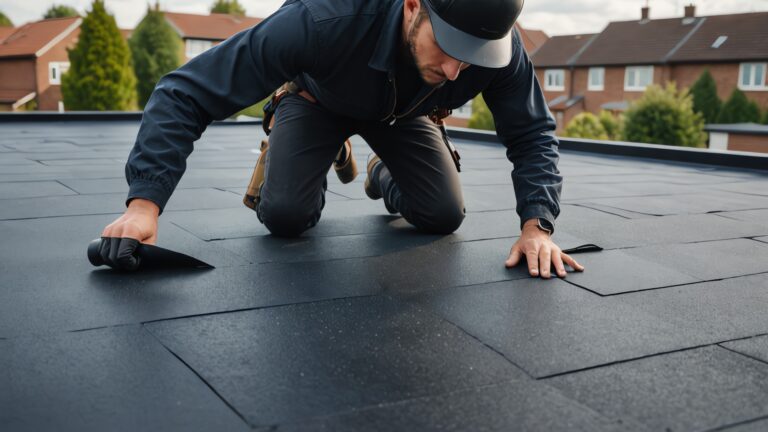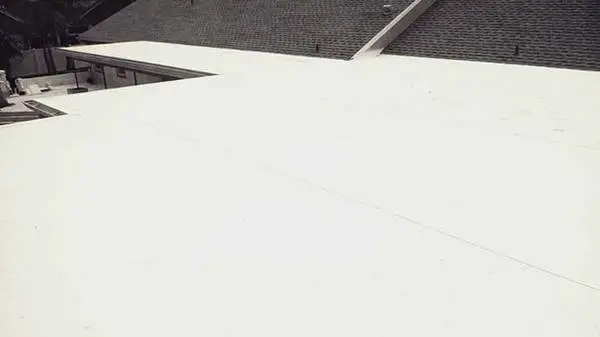
Port Charlotte, FL – Roofing Checklist to Prepare Your Home for Hurricane Season

Hurricane season opens June first. Tropical systems start forming weeks earlier. If your Port Charlotte roof has weak points, you want to find them now while contractors have openings for renovations and materials ship on normal timelines.

Wait until a named storm enters the Gulf and you’re competing with everyone else who put this off. Prices spike and work gets rushed. The checklist below covers what to look at before that happens, starting with the items that matter most.

Edges Fail First, So We Start There
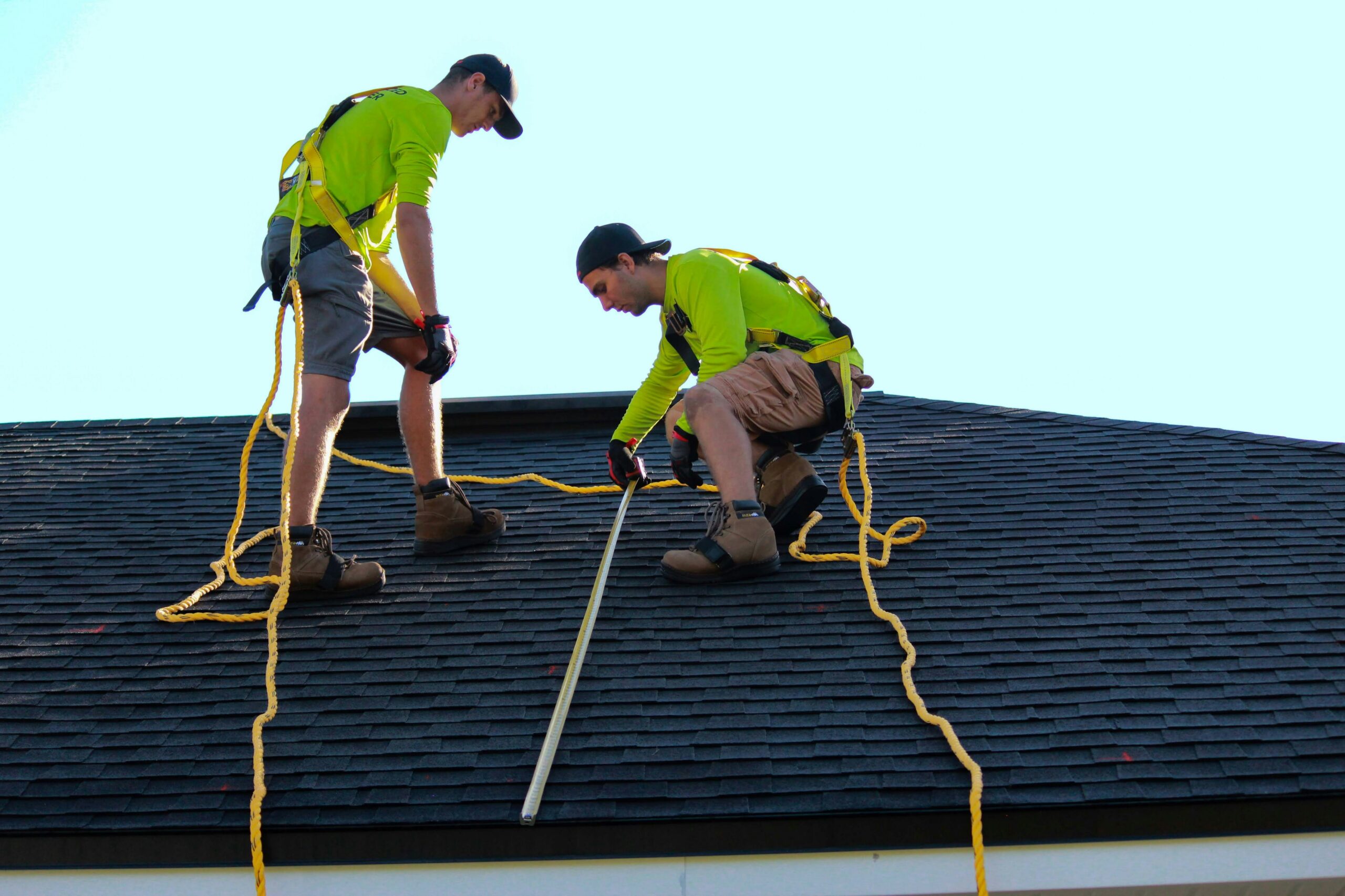
We always start by checking your shingle edges. Hurricane roof failures almost always begin at eaves and rakes where wind catches lifted material and peels it backward across the field. One loose corner can unzip an entire slope.

We walk around your house and look up at the starter courses running along every roof edge. We ;ook for curled corners, tabs lifting away from the surface, or gaps where shingles should lay flat. These spots released their factory adhesive from age, sun damage, or previous wind stress. Pressing them back down and re-sealing costs almost nothing. Waiting until wind-driven rain gets underneath and soaks your deck costs thousands.

Flashings and Penetrations Need a Closer Look
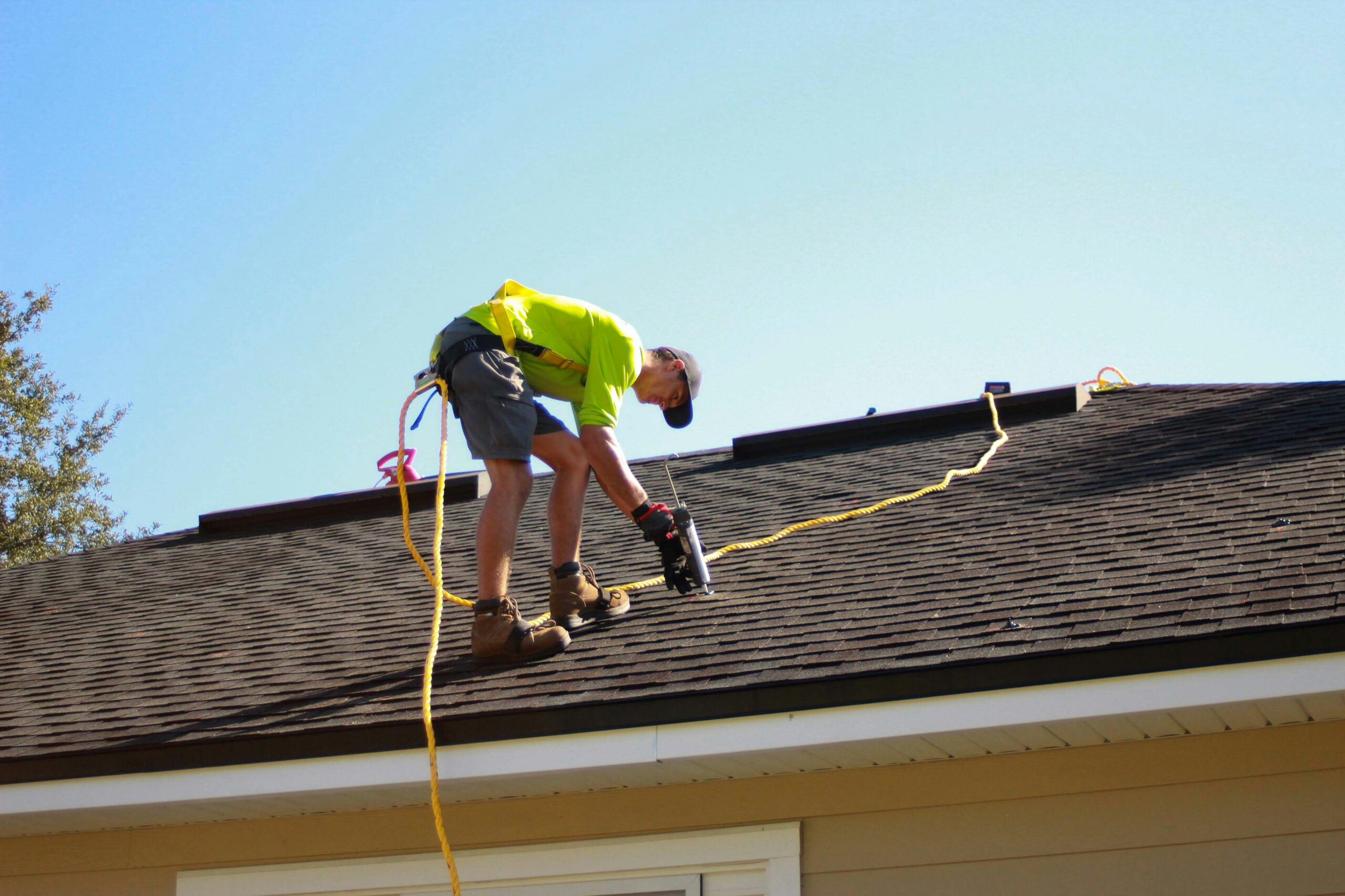
Every pipe, vent, and curb poking through your roof creates a potential entry point. The sealant holding these transitions together degrades over time. Rubber boots around plumbing vents crack and pull away from pipes. Metal flashings work loose where the roof meets the chimney or wall.

We check pipe boots for visible cracks or separation. We look at chimney and wall flashings for gaps or lifted edges catching sunlight underneath. Counter-flashings should overlap step flashings by at least two inches with no visible sealant failure. If anything looks questionable, we flag it for professional renovation before storm season arrives.

Clean Your Gutters Before They Become the Problem
This one you can handle yourself. Clogged gutters during hurricane rainfall overflow and send water cascading down fascia boards, behind siding, and into wall framing. The damage shows up months later as rot and mold you never connected to a storm.

Clear everything out. Check that downspouts discharge at least six feet from your foundation. While you’re up there on the ladder, look at how the gutters hang. Sagging sections hold standing water that overflows during heavy rain and pulls hangers loose from fascia. If you spot sag or soft spots in the fascia wood itself, that’s rot signaling bigger problems worth investigating before a storm tests the whole assembly.

Attic Ventilation Does Double Duty
Good ventilation keeps moisture from weakening your roof sheathing and growing mold in your attic. But during hurricanes, soffit intake vents also provide pressure relief that helps roofs resist uplift. Blocked vents from insulation, paint overspray, or decades of debris eliminate both benefits.

Next we climb into your attic tolook at whether the soffit baffles are clear. Daylight should be visible through intake vents from inside. Ridge vents only work when air can flow in from below, so any blockage at the soffits chokes the whole system. Having us add intake ventilation before storm season improves both roof lifespan and wind performance at once.

Build Your Insurance File Now
When we inspect your roof we give you time-stamped photos of your roof before storm season which can save you thousands in claim disputes later. Adjusters compare pre-storm and post-storm images to figure out what weather actually caused versus what already existed. Without baseline documentation, damage from a storm gets blamed on prior neglect, and coverage gets denied.

We photograph every slope, every penetration, every edge detail. This file protects your claim rights if damage occurs and prevents arguments about what was there before.

Book the Assessment While You Can
Contractor availability tightens as June approaches. Everyone who waited starts calling at once. Finishing repairs in April or May gives adhesives proper cure time, lets materials arrive without supply chain pressure, and ensures work gets the attention it deserves instead of the speed a packed schedule demands. Call PRG Roofing & Construction Inc. at (239) 237-2906 to schedule your pre-season inspection before the calendar takes that option away.


Fort Myers, FL – Storm Tested Residential Metal Roofing Systems Built for Florida

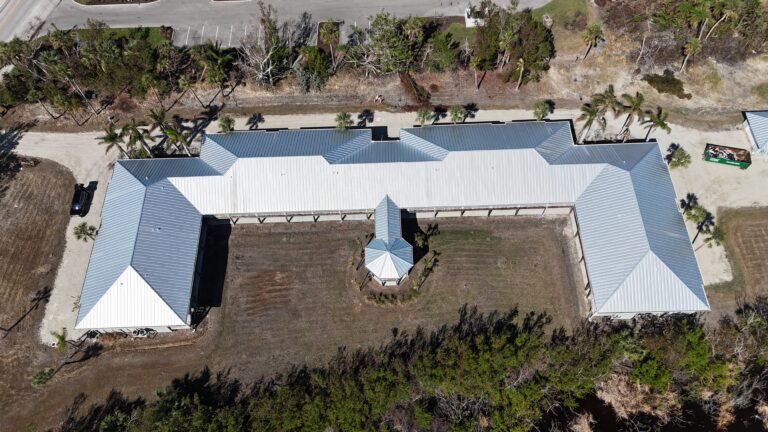
Every metal roofing salesperson in Fort Myers will tell you their product handles hurricanes. Most of them are selling something that hasn’t been tested the way real Florida weather tests it. When 130 mile per hour winds rip through Lee County, standing seam panels with concealed clips stay put. Exposed fastener systems lose screws at the edges and peel backward. The brochures looked identical. The storm results don’t. We install metal roofing we’d put on our own houses, and we won’t touch products we know fail under pressure.

Approval Numbers Aren’t Marketing Fluff

That Florida Product Approval number stamped on your panels means they survived controlled impact and uplift testing in a certified lab. No number means the manufacturer skipped the process and hopes you don’t ask questions. We spec systems rated for Miami-Dade High Velocity Hurricane Zone exposure because Fort Myers faces identical wind loads with looser enforcement. Your insurance company cares about documented ratings. Your building inspector cares. The storm doesn’t read marketing copy.


Exposed Fasteners Are Leak Points Waiting to Open

Screw-down metal panels put hundreds of holes through the roof surface. Every hole depends on a neoprene washer keeping water out. Fort Myers sun cooks those washers until they crack and shrink, somewhere between seven and 10 years out. Then you’ve got leak potential at every single fastener. Standing seam systems hide connections beneath interlocking ribs where UV and rain can’t reach. Higher upfront cost, yes. But decades without chasing leaks at screw heads changes the math completely.


Cheap Paint Fails in Coastal Air

Standard finishes chalk, fade, and lose adhesion within a decade in Southwest Florida conditions. Once coating fails, bare steel meets salt-laden humidity. Rust spreads beneath the surface where you can’t see it until panels need replacing. Kynar 500 and Hylar 5000 PVDF coatings resist UV degradation and chemical attack for 30 to 40 years. We won’t install metal roofing with anything less because we’re the ones getting the callback five years later.


Decking Condition Gets Ignored Too Often

Metal roofing installed over soft wood fails from underneath. We’ve torn off three-year-old roofs where the original crew never checked substrate moisture before screwing panels down. Rot that existed on day one spread under the new surface until everything needed replacing. We probe moisture content across the deck before any panel goes on. Readings above 18% mean that section gets replaced first. And we photograph what we find.


Thermal Movement Cracks Rigid Attachments

Fort Myers temperatures swing 50 degrees between afternoon peak and overnight low. Metal expands and contracts with every cycle. Fixed clip systems fight that movement and create oil canning, warped profiles, and fastener stress that shows up within the first year. Floating clip designs let panels slide as temperatures shift, keeping seams tight and surfaces flat. We engineer clip spacing for panel length, exposure angle, and local temperature ranges. Installers who skip this step create problems you’ll see fast.


Get Real Specs Before You Sign

Metal roofing done right outperforms every other residential option when winds exceed design thresholds. Done wrong, it fails in ways asphalt shingles never would. Waiting until storm damage forces your hand means choosing fast with limited options and inflated prices. Call PRG Roofing & Construction Inc. at (239) 237-2906 to talk through systems that match your house, your budget, and what Fort Myers hurricanes actually demand.


Fort Myers, FL – How Regular Commercial Roof Inspections Protect Your Budget

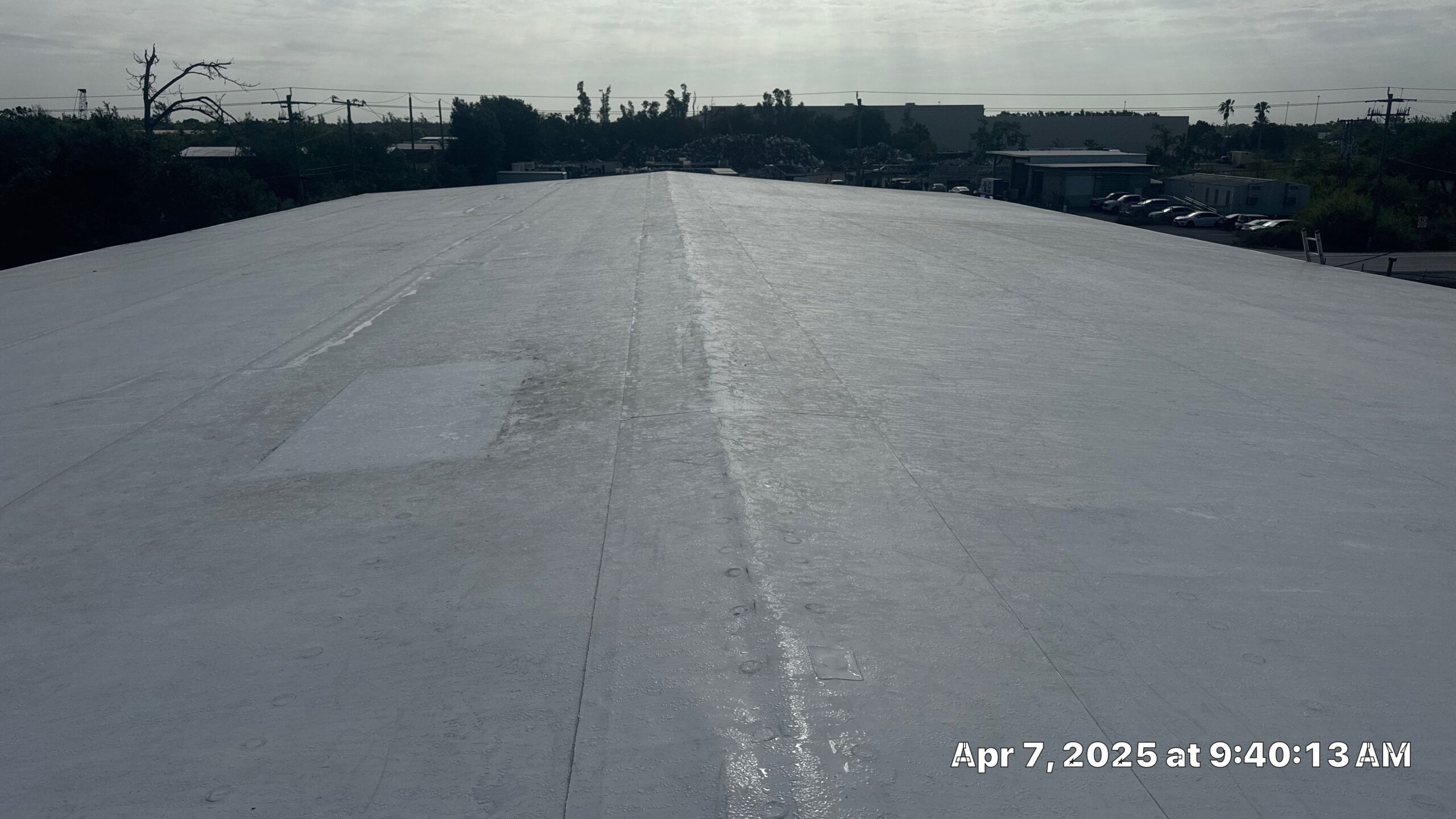
The commercial roof over your Fort Myers property is failing right now in ways you cannot see from the ground, and every month of delay adds cost to the eventual repair bill. Inspections prevent problems, they find them while those problems still have cheap solutions. PRG Roofing & Construction Inc. runs commercial inspection programs across Fort Myers because we’ve watched property managers discover what we could have caught months earlier if they’d scheduled the inspection before the leak appeared.


A roof inspection takes less time than most meetings and produces information worth more than most consultants deliver. We climb up, we test conditions, we document what we find, and we prioritize the findings by urgency so you know exactly what needs immediate attention versus what can wait until next quarter’s budget. The inspection itself costs a fraction of a single emergency call; the information it provides prevents those emergency calls from happening in the first place.


Moisture Testing Reveals What Eyes Cannot See

The most expensive commercial roof damage hides beneath the membrane surface where visual inspection cannot detect it. Water that enters through a seam failure or flashing breach spreads laterally, saturating insulation and degrading deck materials while the membrane above appears intact. By the time ceiling stains reveal the intrusion, extensive replacement has already become necessary. Our moisture meters identify wet zones before visible damage appears, allowing targeted repair rather than wholesale section replacement.


We test systematically across the roof field, documenting readings at each test location and flagging any results that indicate moisture accumulation. A reading approaching 18% tells us the substrate has absorbed enough water to compromise fastener holding power and accelerate material breakdown. Finding that reading during a scheduled inspection means repairing a small section; finding it after ceiling damage appears means replacing everything wet plus everything damaged during the time between infiltration and discovery.


Seam Conditions Predict Future Failures

Membrane seams experience stress from thermal cycling, wind pressure, and building movement that eventually exceeds even well-executed weld strength. The progression from sound seam to failed seam follows predictable patterns: edge lift appears first, followed by partial separation, followed by complete failure that allows water entry. Inspections catch these progressions early, when edge sealing can restore waterproof integrity rather than seam replacement becoming necessary.


We probe seams with instruments designed to detect separation before it becomes visible, documenting any suspect areas with photos and location notes that allow repair crews to address findings efficiently. A seam sealed during its early failure stage holds for years; a seam left until complete separation occurs often requires membrane replacement across the entire affected section because water damage has spread beneath the surface.


Flashing Inspections Catch The Most Common Failures

Most commercial roof leaks originate at flashings rather than in the field, because flashings handle the stress of water concentration, movement differential, and penetration sealing that the field membrane never faces. Every pipe, curb, drain, and edge requires flashing that maintains waterproof continuity across the transition, and every flashing eventually degrades under Fort Myers conditions until water finds a path through.


We inspect every flashing during scheduled visits, checking sealant adhesion, membrane integration, and metal condition at each penetration and termination. Findings get documented with photos that show exactly where attention is needed, prioritized by failure risk so you know which flashings need immediate resealing versus which ones can wait another inspection cycle. This information turns unpredictable emergencies into scheduled maintenance that fits your budget and your calendar.


Drain Function Prevents Structural Overload

Pooling water on a commercial flat roof adds weight that the structure may not be designed to carry long-term, and blocked drains transform rainfall into standing loads that stress connections and compress insulation. We verify drain flow during every inspection, clearing debris blockages and confirming that water paths remain open from roof edge to drainage system. A blocked drain discovered during inspection gets cleared in minutes; a blocked drain discovered after structural damage appears costs whatever the repair demands.


Our inspection reports include drain flow notes and recommendations for any drainage improvements that would reduce ponding risk. Some buildings benefit from additional drains; others need slope correction at specific low points that we identify with laser verification. The information supports budget planning that addresses drainage before emergency conditions force expensive solutions.


Documentation Supports Every Future Decision

Every inspection we complete produces a report with photos, readings, findings, and recommendations that becomes part of your building record. These reports prove conditions at specific dates, which supports warranty claims if installed materials fail to perform as specified. The reports also support insurance claims by demonstrating that the roof received proper maintenance rather than neglect, which increasingly matters as insurers scrutinize commercial property coverage applications.


Maintained documentation also simplifies property transactions by giving buyers verifiable roof condition information rather than uncertainty that drives negotiations and demands. A building with five years of inspection reports showing maintained conditions commands confidence that a building without records cannot match. The documentation takes minutes to produce; the value it delivers compounds over years of property ownership.


Inspection Scheduling Beats Storm Season Chaos

Fort Myers hurricane season runs June through November, and the weeks after every tropical system bring chaotic demand for roofing services that pushes prices up and availability down. Inspections scheduled in spring catch problems while repair crews have normal availability and material supplies remain stable. The same repair that costs standard rates in April might cost emergency premiums in September because every roofer in the region is responding to storm damage.


We recommend scheduling commercial inspections between Decemberand May, with repairs completed before June first when possible. This timing aligns maintenance with budget cycles for many property managers and ensures that any identified issues get addressed before the weather creates both higher stakes and higher costs.


Protect Your Fort Myers Commercial Property

A commercial roof inspection costs less than a single emergency call and prevents more damage than any reactive response can match. PRG Roofing & Construction Inc. provides scheduled inspection programs for Fort Myers commercial properties, delivering the moisture testing, seam verification, and documented reports that transform roof maintenance from guesswork into strategy. Call (239) 237-2906 to schedule your inspection today and get the information that protects your building, your budget, and your business through every storm season ahead.


Bonita Springs, FL – Tile Roofing: Style, Durability, and Hurricane Performance

Tile roofing in Bonita Springs delivers what no other material can match: decades of service life wrapped in architectural character that transforms ordinary homes into landmarks. The clay and concrete profiles that line the best neighborhoods here don’t just look distinguished; they withstand conditions that send lesser materials to the landfill. PRG Roofing & Construction Inc. installs tile roof systems built to perform under Florida’s most demanding weather cycles, documented at every phase to prove the installation meets the standards these materials deserve.


The beauty of tile roofing masks the technical complexity beneath it. Weight loads require structural verification before installation proceeds. Underlayment selection determines whether the system survives decades or fails within years. Fastening patterns must meet Florida Building Code for your specific wind zone, and hip and ridge details require specialized techniques that many contractors skip to win bids. We handle every detail because we’ve seen what happens when any of them gets overlooked.


Structural Requirements Precede Material Selection

Tile roofs carry significant weight that your home’s framing must support without deflection or distress. Concrete tiles run heavier than clay, and both run substantially heavier than the shingles they often replace. We verify structural capacity before recommending tile installation, examining truss spacing, rafter sizing, and connection hardware to confirm the load path can handle the material weight plus the water retention that occurs during heavy rainfall. Installing tile on inadequate structure creates liability rather than value.


Our assessment documents existing conditions and identifies any reinforcement requirements, providing clear information before contracts get signed. Some homes need no modifications; others need connection upgrades or supplemental supports that add cost but ensure long-term safety. Honest assessment protects everyone involved, and our process delivers exactly that clarity for every Bonita Springs tile project we evaluate.


Underlayment Systems Determine Actual Performance

The tiles you see from the street provide the first line of water shedding, but the underlayment beneath them provides the actual waterproof barrier that protects your home when water gets past the tile surface. Every tile roof allows some water beneath the field during wind-driven rain events; that water must drain harmlessly over underlayment rated for decades of exposure to heat, moisture, and UV if any tile breaks allow direct sunlight penetration.


We specify synthetic underlayments with high temperature ratings for every Bonita Springs tile installation, avoiding the felt products that degrade within years under Florida heat cycling. The underlayment we install today must protect your home 15years from now when a broken tile allows water and light access that would destroy lesser materials. This product selection adds cost that cheaper contractors avoid; that cost difference shows up later when failed underlayment requires complete roof removal to replace.


Fastening Patterns Meet Florida Wind Codes

Florida Building Code specifies fastening requirements based on wind zone, roof geometry, and tile type, and Bonita Springs locations typically fall within zones requiring enhanced attachment. We verify fastener type, placement, and quantity for every tile we install, using code-required patterns that resist uplift during hurricane conditions rather than the reduced patterns that contractors use in lower-wind states. The difference is invisible until wind tests every connection; by then, the shortcuts have already failed.


Our documentation includes representative photos of fastening patterns that prove code compliance for your building records. These photos support insurance claims if storm damage ever occurs and demonstrate to future buyers that the roof was installed correctly rather than cobbled together to win a low bid. Fastening patterns matter enormously; our process ensures they receive the attention they require.


Hip And Ridge Details Complete The System

The tiles along your roof’s peaks and intersections require specialized installation techniques that seal transitions against wind-driven water and resist uplift at the most vulnerable locations. We treat every hip and ridge as a critical zone, documenting installation sequences and verifying mortar or fastener placement before moving to the next section. Our crews receive specific training on tile roof transition work because we’ve seen how often this specialization makes the difference between roofs that survive hurricanes and roofs that don’t.


Hurricane Performance Comes From Complete Systems

When tropical systems approach Bonita Springs, your tile roof faces wind pressure that tests every connection, every transition, and every detail that seemed minor during installation. Roofs with proper structural support, rated underlayment, code-compliant fastening, and correctly installed transitions remain intact and watertight. Roofs with shortcuts in any of those areas fail progressively, with each failed component exposing the next until water enters the home and damages compounds rapidly.

We install tile roof systems designed for hurricane performance, documented at every phase with evidence that proves code compliance and manufacturer specification adherence. That documentation isn’t bureaucracy; it’s protection that supports warranty claims, insurance recovery, and the peace of knowing your roof was built correctly rather than quickly.


Give Your Bonita Springs Home The Tile Roof It Deserves

Tile roofing represents a significant investment that delivers significant returns when installation respects the material’s technical requirements. PRG Roofing & Construction Inc. provides the structural verification, material specification, and documented installation that transforms tile from a style choice into a performance system built for Bonita Springs conditions. Call (239) 237-2906 to schedule your tile roof evaluation today and get the information you need to choose the system that protects your home and enhances its beauty for decades to come.


Fort Myers, FL – How to Choose Between Shingle, Tile & Metal Roofing Materials​

Which Roof Handles Fort Myers Heat Best?

Are you fighting attic heat that lingers into the evening? Metal reflects aggressively when paired with a quality finish and a ventilated deck, which lowers thermal load across the system. Tile tolerates surface heat well, yet durability still depends on a high temperature underlayment that stays intact over time. Shingles hold up when intake and ridge exhaust keep adhesives from cooking below the deck. Ventilation is not optional in Fort Myers heat; it is the difference between slow aging and early failure.

Which Option Resists Wind Uplift In Fort Myers? 

Do storms keep finding your eaves and rakes first? Shingles perform when starter courses, nail patterns, and edge seals match our wind zone, which keeps the perimeter locked under pressure. Tile stays put when hips and ridges are secured correctly and when valley transitions move water cleanly away from penetrations. Metal excels with concealed fasteners, continuous edge metal, and hemmed eaves that deny wind a clean grip. The perimeter decides storm outcomes in Fort Myers, so we build the edges like a defense line.

How Do Weight And Structure Affect My Choice? 

Does your framing safely carry additional load without flexing? Tile adds significant weight, so deck condition and fastener history must be confirmed before any installation moves forward. Shingles place less load and install quickly with minimal structural impact, which suits many neighborhoods across Fort Myers. Metal usually sits between them, and we still verify substrate strength before recommending a profile. Structure checks turn personal preference into a safe plan rather than an expensive risk.

What Do Valleys And Penetrations Require In Fort Myers? 

Do you have skylights, multiple pipes, or complex valleys on your roof? Shingles demand disciplined flashing and sealed terminations where water first attempts entry, especially along high flow channels. Tile relies on clean water paths and ridge work that protect the underlayment during heavy rain events. Metal benefits from continuous cleats and properly detailed transitions at curbs and pipes that see service traffic. These junctions decide performance long before the open field ever does.

What Does Maintenance Look Like Over The Years? 

Are you planning proactive checks or waiting for leaks to appear? Shingle owners should schedule edge resets when seal strips age and correct fastener issues at penetrations before storms arrive. Tile owners should schedule having  broken pieces replaced  promptly and have  underlayment reviewed in known wear zones so water never reaches the deck. Metal owners should have  brackets verified, as well as clip tension, and finish condition where equipment or ladders touch the surface. Documented maintenance extends service life across every material in Fort Myers.

How Does Ventilation Change Outcomes In Fort Myers? 

Do your soffits breathe, or did paint close them years ago? A cool attic protects adhesives, decking, and fasteners across shingle, tile, and metal assemblies alike. We size intake and exhaust by deck area, then confirm airflow during inspection with visible checks and readings. Balanced ventilation stabilizes temperatures and pressures during storm cycles. That stability buys years of service life you can actually feel during late afternoons.

What Proof Should I See Before I Decide? 

Do you have photos and readings, or only a summary quote? PRG Roofing provides time stamped photo logs, deck moisture readings, and laser slope verification for every Fort Myers comparison. If deck moisture readings approach 18% , boards are replaced rather than fastened into wet weakness that will fail later. If slope creates pooling risk, tapered insulation is considered before any material is chosen. Evidence lets you compare options without guesswork or sales language.

Which Material Fits My Budget And Timeline? 

Are you trying to minimize upfront cost, or maximize service life per dollar? Shingles often deliver the lowest initial cost when edges and airflow are tuned correctly for our climate. Tile often commands a higher initial cost, then offers long service potential when the underlayment stays clean and dry under real rain. Metal delivers compelling life cycle value when finish chemistry, edge construction, and clip spacing are executed precisely. We align these choices to your roof and your calendar so the plan fits the way you live.

How Does PRG Turn Choices Into A Clean Plan? 

We measure your roof, test airflow, check deck moisture, and examine edges and penetrations with field cameras. We present shingle, tile, and metal options that meet code and match how your roof sheds water today, then we rank trade offs in plain language. You finish with photos, readings, and a Fort Myers plan that works on paper and in a storm. Call PRG Roofing & Construction Inc. at (239) 237-2906 to schedule a Fort Myers comparison today. Choose once, then live with a quiet, stable roof through the season.

Fort Myers, FL – The Hidden Costs of Delaying Roof Repairs from a Roofing Company​

Day 1: The “It’s Just a Stain” Stage

The first sign is small. A faint line on your ceiling after a heavy Fort Myers rain looks harmless. You tell yourself it can wait until next week. Meanwhile, water sits trapped between the decking and insulation. The stain isn’t the problem; it’s the symptom. Beneath it, fasteners have started rusting, the underlayment is swelling, and your roof deck is beginning to lose strength. One more storm, and that quiet mark becomes a leak that spreads faster than you can patch it.

Week 2: The Moisture Creep Begins 

Heat and humidity in Fort Myers accelerate every chemical process inside your roof system. Water that entered through one lifted edge now migrates along nail lines. It softens adhesives that once sealed your shingles or tiles tight. You can’t see it from the ground, but your decking’s moisture level is already climbing. Once moisture readings reach around 18% , wood begins to break down and hold fasteners poorly. That’s when a repair becomes a rebuild.

Month 1: The Budget Shift You Didn’t Plan For 

What started as a minor repair now involves replacing wet decking, underlayment, and damaged insulation. Interior staining spreads across joists and drywall, which means having to bring in painters, drywall finishers, and possibly electrical work. The cost jumps from hundreds to thousands because the issue multiplied below the surface. We’ve seen this exact timeline dozens of times in Fort Myers: one ignored edge becomes a renovation project by the second storm.

Month 3: The Structural Ripple Effect 

Water doesn’t stay where it lands. It travels through vents, across rafters, and into wall cavities. If your attic ventilation is blocked, that trapped moisture cooks under heat, accelerating mold and corrosion. Over time, even fasteners that weren’t near the leak start backing out as wood swells and contracts. The repair no longer belongs to the roofing budget, it’s now structural work. That’s the real cost of waiting.

Month 6: The Insurance Problem

Delays often void coverage. Insurance adjusters read moisture spread like crime scene evidence. When they see long-term saturation, they call it “maintenance neglect.” In Fort Myers, that ruling means denial. PRG Roofing & Construction Inc. gives you the opposite outcome. We produce time-stamped photos, slope measurements, and repair documentation that prove the issue was identified and addressed early. That evidence turns a claim from an argument into a reimbursement.

Month 12: The Next Storm Writes the Final Bill 

Hurricane season doesn’t ask permission. Every gust that sneaks beneath an already lifted edge multiplies damage. Once the seal breaks, your roof isn’t deflecting wind because it’s catching it. We’ve tested this repeatedly: underlayment tears at the same edge where water first entered. That is why Fort Myers homeowners who fix issues immediately pay once; those who wait pay again after the next tropical storm.

The Science Behind the Numbers 

Moisture testing proves what eyes can’t. Our technicians use calibrated meters to locate water beneath the surface. When we find elevated readings, we cut open a section, photograph it, and replace only what’s compromised. We also measure roof slope with a laser because improper drainage worsens standing moisture. Our work follows Florida Product Approval specifications, which protect you against both storms and warranty disputes.

The Smarter Equation: Repair Early, Save Later 

A roof isn’t designed to be patient. Every delay transfers cost from the exterior to the interior. The same edge reset in April often becomes a restoration by July. Timely repair also buys stability for hurricane season, reducing emergency costs when demand for roofers skyrockets. PRG Roofing repairs edges, flashings, and underlayment lines now, so you’re not bidding for help when everyone else is.

Your Next Step 

If your Fort Myers roof shows stains, lifted edges, or old sealant lines, don’t let the next storm write your invoice. Call (239) 237-2906 for a roof inspection that measures damage before it multiplies. PRG Roofing & Construction Inc. will show you readings, photos, and a plan that keeps your roof stable, your interior dry, and your costs predictable.

Naples, FL – The Lifespan of a Shingle Roof in Southwest Florida’s Climate

A roofing package might promise 30 years of protection, but Naples weather has other plans. The combination of extreme heat, punishing UV rays, and tropical humidity shaves that estimate nearly in half. In Southwest Florida, shingle roofs rarely reach twenty years of service. Most begin showing failure signs between years twelve and fifteen.

Heat And Ventilation Decide Early Failure Or Extra Years
Florida sun pushes roof surface temperatures above 150 degrees, softening adhesives and curling shingle edges. Poor attic ventilation turns spaces beneath into ovens, baking shingles from the inside until decking warps. We have removed shingles in Naples that cracked apart by hand because ventilation was missing. Balanced ridge vents and soffit airflow is not optional in this climate; it is the only way to stop heat from cutting a decade off a roof’s life. Ventilation multiplies years like nothing else.

Storm Cycles Write Their Own Timeline
Afternoon thunderstorms in Naples drive water under loose shingles while high winds find weaknesses in seal strips. Hurricanes punish those same points, peeling entire courses off when fasteners were not set in approved patterns. Every major storm ages a roof faster than the calendar suggests. Florida Product Approval-rated shingles resist longer, but even they need careful fastening and sealed underlayments to hold up. The climate does not wait for warranties to expire; it writes its own schedule.

Algae And Mold Are More Than Stains
Those black streaks spreading across Naples shingles are not just ugly; they are evidence of algae feeding on protective granules. Shaded roofs hold moisture long after storms pass, creating breeding grounds for mold that softens decking below. We have inspected roofs that looked fine from the street but hid serious decay underneath. Algae and mold are not just cosmetic, they shorten service life year by year. Treatments and cleanings extend shingle lifespan, but ignoring streaks guarantees an early end.

Gutters Are The Early Warning
Homeowners often check shingle surfaces for damage, but the real damagehides in the gutters. When shingles shed their protective granules, the debris collects like sand along gutter lines. That grit means the roof has lost its armor and will deteriorate faster with every storm. In Naples, a gutter full of granules is more than just cleanup, it’s a countdown. Catching it early means repairs and reseals can buy years, but left alone, the roof heads toward failure fast.

Inspections And Records Add Service Years
Regular inspections are not just insurance requirements; they are roof lifesavers. Spotting lifted edges, resealing flashings, and treating algae extend shingles far beyond the average. At PRG Roofing & Construction Inc., we document every inspection with photos and Florida Product Approval references so insurers and owners know exactly what has been done. Records prove diligence and stop small failures before they multiply. In Naples, a roof without inspection records is a roof aging in silence.

Take Control Of Your Roof’s Timeline
If you own a shingle roof in Naples, assume it will not outlast the northern averages unless you act. Call PRG Roofing & Construction Inc. at (239) 237-2906 to schedule a shingle roof assessment. We will measure its true age, identify hidden failures, and show you practical steps that add service years. Do not wait for the next storm, protect your property with a roof built to endure Southwest Florida’s climate.

Fort Myers, FL – How Hurricane-Resistant Roofing Protects SW Florida Properties

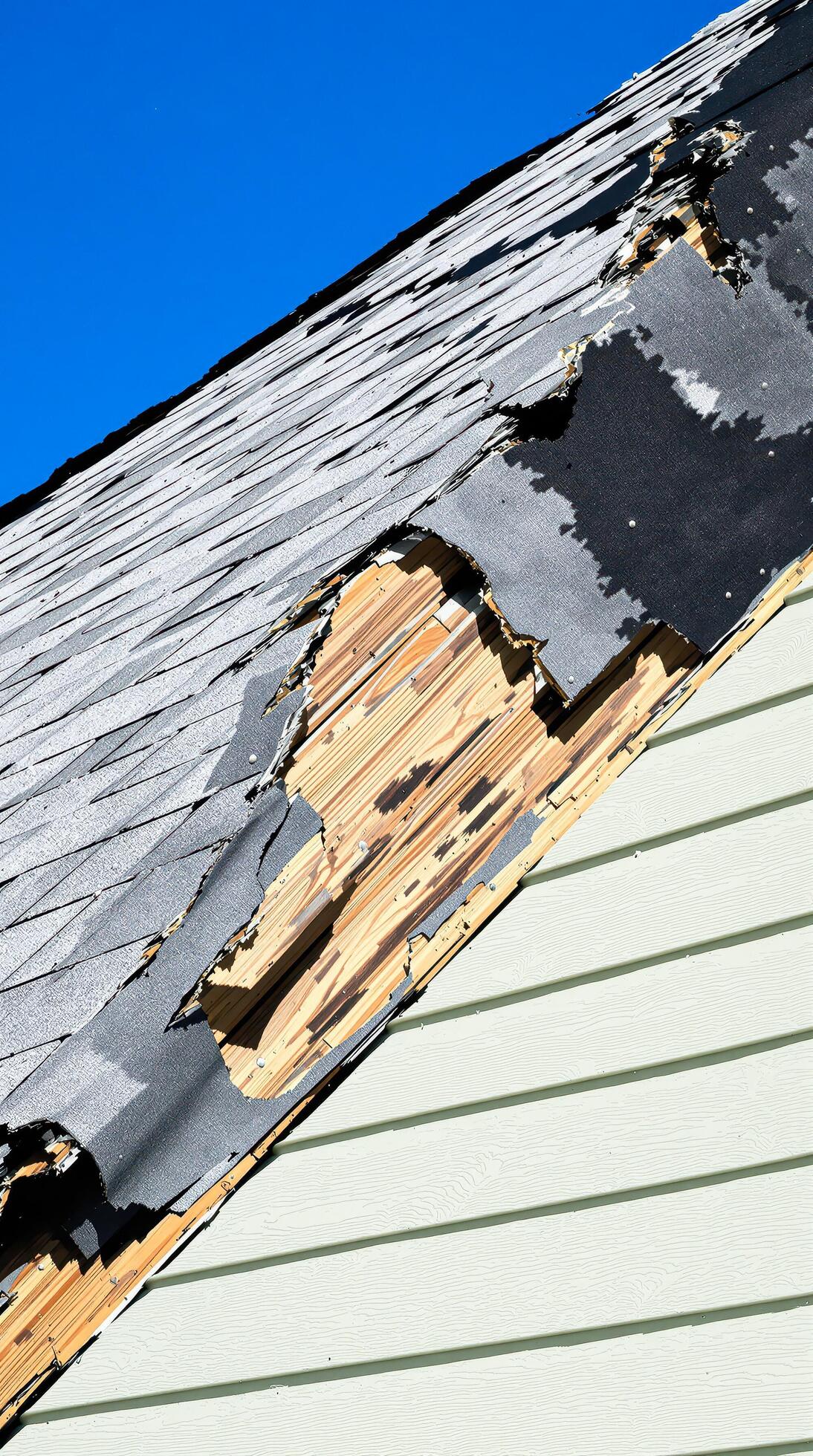
In Fort Myers, hurricane season can be devastating to your home’s roof.. High inds attack shingles, tiles and even metal roof edges, rain blows sideways and can get under soffits, and debris pounds every surface like hammers. A roof that is only “code minimum” does not always pass that test. Hurricane-resistant roofing is not a label, it is a system built with materials and methods designed for Florida storms. If the system cannot prove itself in a storm, it will not protect you when you need it most.

The Edge Is Where Failures Begin
Most roofs in Fort Myers do not fail in the middle; they fail at the edges. Loose flashings and sloppy fastener spacing give wind the leverage it needs. Once wind gets under the edge, entire sections peel away. That is why we install approved metal edge securement, sealed underlayments, and precise fastener patterns documented under Florida Product Approval. We reinforce the edges because storms always test them first.

Metal Roofing Turns Into A Hurricane Shield
Metal roofing, when installed correctly, transforms a property into a storm-ready fortress. Hidden fasteners lock panels against uplift, while Kynar-coated finishes resist the salt air that destroys inferior coatings in Fort Myers. Every panel we install follows uplift resistance spacing designed for hurricane zones. That detail turns a vulnerable sheet of metal into a shield. A metal roof built this way stays in place when storms try to tear it apart.

Tile Only Protects When Anchored With Precision
Tile is a beautiful material, but beauty alone has no value in 140 mph winds. Improperly set tile becomes shrapnel, littering yards and tearing into structures. Proper hurricane-rated tile uses code-approved foam adhesives or mechanical fasteners set in bead patterns engineered for high-velocity zones. We install every tile with those patterns because we have seen the alternative fail. Anchored tile stays tight, protecting the property below when storms hit hardest.

Impact-Rated Shingles Are The Line Between Holding And Losing
Shingles may be the most common roofing choice, but not all shingles qualify as hurricane-resistant. Standard shingles pass bare code but fail when debris and uplift push them past their limits. Impact-rated shingles use stronger adhesive strips and enhanced fastener spacing. In Fort Myers, we only install shingles that carry Florida Product Approval, so insurers and inspectors know they are certified to perform. A shingle without a rating is not protection; it is just asphalt waiting to tear loose.

Secondary Water Barriers Save Interiors
One critical element most owners never see is the secondary water barrier. Peel-and-stick membranes under the main roof act as the last line of defense. When outer layers fail, these membranes stop water from soaking insulation and drywall. We photo document these installs because we know how many claims are decided by whether this layer existed. In Fort Myers storms, this hidden barrier is the difference between moppingup a little water and rebuilding entire rooms.

Documentation Turns Strength Into Proof
A hurricane-resistant roof only matters if you can prove it. Florida Product Approval numbers, fastener pattern records, and photo logs are the evidence insurers require. We provide inspection-ready packets with every install. Without proof, discounts disappear and claims face challenges. With proof, the roof becomes an asset on paper as well as in practice. Insurers respect evidence, not promises, and we deliver it.

The Roof That Pays You Back
A hurricane-resistant roof pays you twice. It earns lower premiums because insurers recognize reduced risk. It saves again when storms pass and your roof is still standing, keeping repairs and claims off your record. In Fort Myers, the right roof holds value while weaker roofs fail. A roof is either a liability or a long-term asset. Hurricane-ready systems turn it into the asset you can count on.

Protect Your Fort Myers Property Today
If you want your Fort Myers property to stand strong after the next storm, you need a roof built for hurricanes. Call PRG Roofing & Construction Inc. at (239) 237-2906 to schedule a hurricane-readiness consultation. We will evaluate your current system, recommend proven upgrades, and provide documentation insurers cannot ignore. Do not wait until the calendar brings the next storm; build the roof that still stands when the wind stops.

Naples, FL – How PRG Roofing Company Helps Local Homeowners After Major Storms

In Naples, storms leave more than fallen branches and scattered debris. They loosen seams, corrode fasteners, and bend flashing in ways you cannot see from the driveway. The most damaging failures begin quietly, hidden under layers, and only reveal themselves after water stains crawl across ceilings. By the time interior damage shows, insulation is already saturated and decking is already weakened. PRG Roofing & Construction Inc. helps Naples homeowners uncover these silent failures before they spiral into structural loss.

Fast Response Keeps Roof Damage Contained
After a storm, every hour matters. Water spreads faster than most homeowners realize, turning minor damage into major repairs while people wait for insurance adjusters. Our crews respond quickly in Naples with tarps, pumps, and sealants to stop water from entering. We explain the limits clearly: tarps last days, not seasons, and sealants fail under prolonged heat and UV. Containment buys time, but lasting solutions come from permanent repair. Acting immediately is the only way to control the cost of recovery.

Inspections Prove More Than Appearances
Storm damage is rarely obvious. Seams lift under suction, fasteners rust beneath panels, and flashing separates at edges where wind pressure is highest. We perform hands-on inspections in Naples, pulling seams, probing flashing, and photographing each issue with CompanyCam. This record speeds claims and ensures no damage is missed. A roof can look fine from the street yet still be days from collapse without proper inspection.

Mistakes That Turn Storms Into Disasters
One mistake we see often is homeowners climbing onto wet roofs, risking injury while missing the real weak points. Another is trusting quick patches as permanent fixes, which almost always fail weeks later. A third is ignoring clogged drains and scuppers, which trap water until membranes collapse under the weight. Naples storms do not forgive oversights, they magnify them. Avoiding these common mistakes prevents storm damage from becoming a financial disaster.

Fasteners Fail Before Panels
Homeowners often assume roof panels fail first, but in reality fasteners are the true weak link. In Naples salt air, standard screws corrode quickly and lose grip long before panels degrade. Once fasteners lose hold, uplift starts at a single point and spreads. That is why we only install stainless or coated fasteners engineered for coastal environments. A roof is never stronger than its smallest connection, and fasteners decide whether it holds or fails.

Restoring Roofs Instead Of Replacing Them

Not every storm-damaged roof requires full replacement. Restoration coatings can seal micro-cracks, reinforce seams, and restore reflectivity, adding years of service life. Every restoration we perform in Naples prevents tons of material from going to landfill while saving homeowners thousands in early replacement costs. The key is timing, because coatings work only before damage becomes structural. Restoration is sustainability and savings in one step.

Permanent Protection After Emergency Work
Emergency work keeps water out, but it is only the start of recovery. Naples homeowners need roofing systems that withstand the next season, not just patch the last one. We provide full replacements when required, but we also deliver ongoing management programs that schedule inspections and reinforcements. Hurricanes are not rare in Southwest Florida, they are routine tests. Long-term preparation begins the day after the last storm ends.

Naples Roofs Built To Endure Every Season
Major storms will continue to test Naples roofs year after year. PRG Roofing & Construction Inc. responds fast, documents damage thoroughly, and installs permanent solutions that hold long after temporary fixes are gone. We do not leave homeowners guessing; we show what failed, what held, and what needs reinforcement. Call us today at (239) 237-2906 to secure your Naples roof with emergency response and lasting protection before the next storm arrives.

Leave us a Review on BBB

Notary Services

© Copyright 2026 PRG Roofing & Construction, Inc. All Rights Reserved. Website by Visitivity Inc.