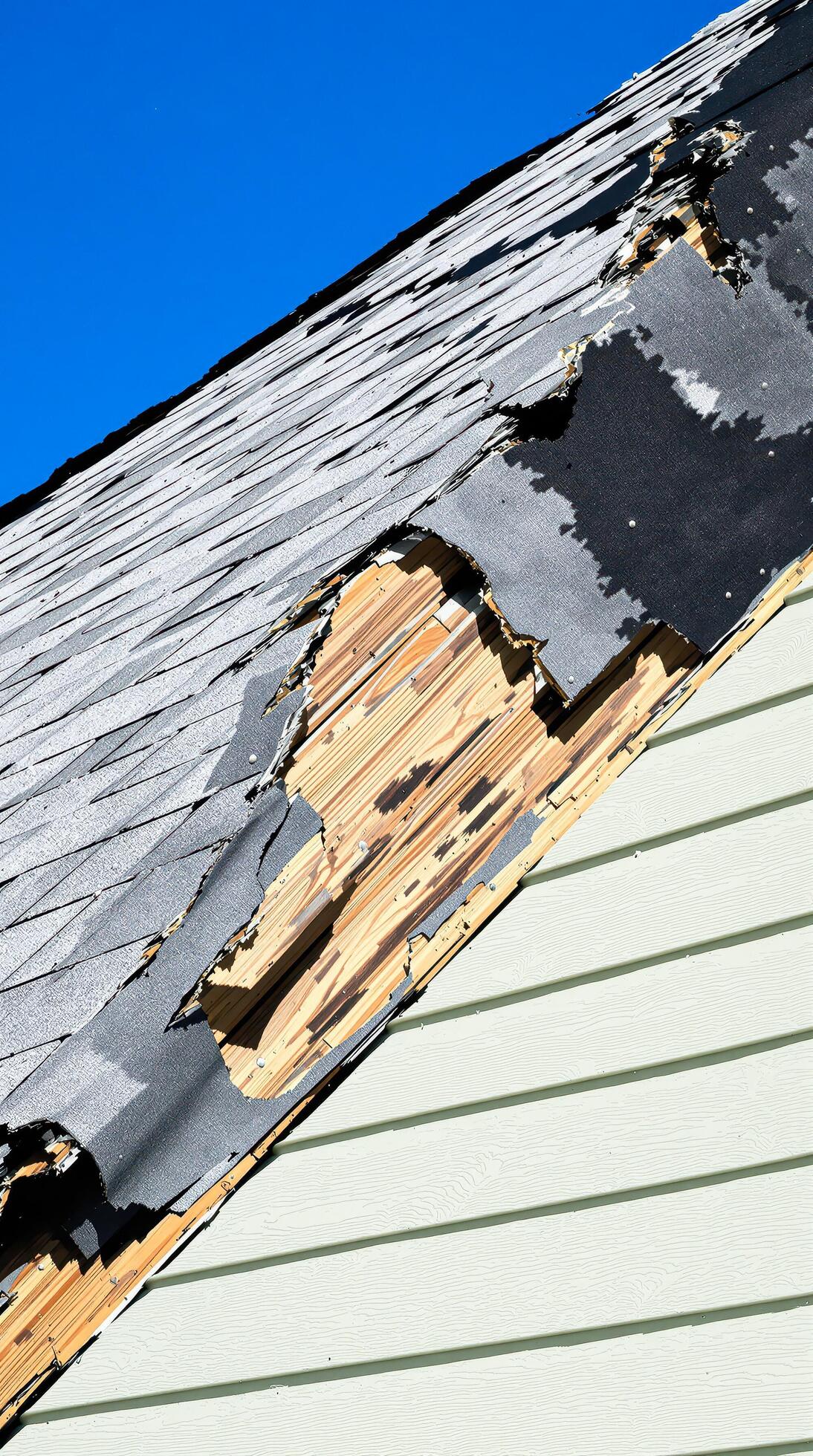
Port Charlotte, FL – Roofing Checklist to Prepare Your Home for Hurricane Season
Hurricane season opens June first. Tropical systems start forming weeks earlier. If your Port Charlotte roof has weak points, you want to find them now while contractors have openings for renovations and materials ship on normal timelines.
Wait until a named storm enters the Gulf and you’re competing with everyone else who put this off. Prices spike and work gets rushed. The checklist below covers what to look at before that happens, starting with the items that matter most.
Edges Fail First, So We Start There
We always start by checking your shingle edges. Hurricane roof failures almost always begin at eaves and rakes where wind catches lifted material and peels it backward across the field. One loose corner can unzip an entire slope.
We walk around your house and look up at the starter courses running along every roof edge. We ;ook for curled corners, tabs lifting away from the surface, or gaps where shingles should lay flat. These spots released their factory adhesive from age, sun damage, or previous wind stress. Pressing them back down and re-sealing costs almost nothing. Waiting until wind-driven rain gets underneath and soaks your deck costs thousands.
Flashings and Penetrations Need a Closer Look
Every pipe, vent, and curb poking through your roof creates a potential entry point. The sealant holding these transitions together degrades over time. Rubber boots around plumbing vents crack and pull away from pipes. Metal flashings work loose where the roof meets the chimney or wall.
We check pipe boots for visible cracks or separation. We look at chimney and wall flashings for gaps or lifted edges catching sunlight underneath. Counter-flashings should overlap step flashings by at least two inches with no visible sealant failure. If anything looks questionable, we flag it for professional renovation before storm season arrives.
Clean Your Gutters Before They Become the Problem
This one you can handle yourself. Clogged gutters during hurricane rainfall overflow and send water cascading down fascia boards, behind siding, and into wall framing. The damage shows up months later as rot and mold you never connected to a storm.
Clear everything out. Check that downspouts discharge at least six feet from your foundation. While you’re up there on the ladder, look at how the gutters hang. Sagging sections hold standing water that overflows during heavy rain and pulls hangers loose from fascia. If you spot sag or soft spots in the fascia wood itself, that’s rot signaling bigger problems worth investigating before a storm tests the whole assembly.
Attic Ventilation Does Double Duty
Good ventilation keeps moisture from weakening your roof sheathing and growing mold in your attic. But during hurricanes, soffit intake vents also provide pressure relief that helps roofs resist uplift. Blocked vents from insulation, paint overspray, or decades of debris eliminate both benefits.
Next we climb into your attic tolook at whether the soffit baffles are clear. Daylight should be visible through intake vents from inside. Ridge vents only work when air can flow in from below, so any blockage at the soffits chokes the whole system. Having us add intake ventilation before storm season improves both roof lifespan and wind performance at once.
Build Your Insurance File Now
When we inspect your roof we give you time-stamped photos of your roof before storm season which can save you thousands in claim disputes later. Adjusters compare pre-storm and post-storm images to figure out what weather actually caused versus what already existed. Without baseline documentation, damage from a storm gets blamed on prior neglect, and coverage gets denied.
We photograph every slope, every penetration, every edge detail. This file protects your claim rights if damage occurs and prevents arguments about what was there before.
Book the Assessment While You Can
Contractor availability tightens as June approaches. Everyone who waited starts calling at once. Finishing repairs in April or May gives adhesives proper cure time, lets materials arrive without supply chain pressure, and ensures work gets the attention it deserves instead of the speed a packed schedule demands. Call PRG Roofing & Construction Inc. at (239) 237-2906 to schedule your pre-season inspection before the calendar takes that option away.
Fort Myers, FL – Is It Time to Replace Your Roof? What Homeowners Need to Know
Most homeowners don’t think about their roof until something goes wrong. A dark spot appears on the ceiling. Shingles blow off during a storm. Or worse—your insurance company sends a letter saying they won’t renew your policy unless you replace your aging roof.
At PRG Roofing & Construction, we’ve helped hundreds of Southwest Florida families navigate the roof replacement decision over the past two decades. While every situation is unique, certain patterns emerge that help determine whether repair makes sense or if it’s time for a complete replacement.
The Warning Signs You Shouldn’t Ignore
Age alone doesn’t determine when a roof needs replacement, but it’s a significant factor—especially in Southwest Florida’s demanding climate. Asphalt shingle roofs in Fort Myers and Cape Coral typically show meaningful deterioration between 15 and 20 years, while metal roofs can last considerably longer with proper maintenance.
Beyond age, several specific indicators tell us when replacement makes more financial sense than ongoing repairs:
Granule accumulation in your gutters signals that shingles are losing their protective coating. When you start finding what looks like coarse sand collecting after every rain, the asphalt layer underneath is becoming exposed to UV damage.
Edges that lift repeatedly after storms indicate that the adhesive seal has failed permanently. You can have these areas repaired, but if the problem keeps returning across multiple sections, the entire roof system has likely reached the end of its effective service life.
Soft or spongy decking means water has already penetrated through the roofing layers and compromised the structural foundation. We test for this during inspections by checking deck flexibility and running moisture readings across the roof field.
Multiple repair areas that overlap create a patchwork that eventually costs more than replacement would have. When repair invoices start adding up, it’s usually time to consider a comprehensive solution.
The biggest mistake we see homeowners make is continuing to patch problems for too long. By the time you’ve invested in multiple repair calls over several years, you’ve often spent enough to have covered a significant portion of a new roof—one that would deliver decades of reliable protection instead of temporary fixes.
What Actually Happens During a Roof Replacement
If you’ve never been through a roof replacement, the process might seem mysterious or overwhelming. Our approach breaks down into clear, documented stages that ensure quality from start to finish.
We always perform a complete tear-off to the deck rather than layering over existing materials. This allows us to inspect the actual structural foundation of your roof—something you can’t properly evaluate when old shingles remain in place. We remove damaged sections of decking and test moisture levels across the entire roof field using calibrated meters. When readings approach 18%, we replace those boards rather than trapping moisture beneath your new roof.
Once the deck is sound and dry, we install appropriate underlayment based on your roof’s specific exposure and slope. All penetrations—vents, pipes, chimneys—get reflashed to current Florida Building Code standards, and edge metal is installed to protect vulnerable perimeter areas.
The final critical element involves balanced ventilation. Proper airflow requires intake at the soffit level and exhaust at the ridge, creating continuous circulation that prevents heat and moisture buildup in your attic space. This step directly affects how long your new roof lasts in Southwest Florida’s heat and humidity.
Throughout every project, we document each phase through our CompanyCam system. You’ll have access to photos showing your deck condition, underlayment installation, and finished product—creating a permanent record of exactly what was done and how.
Most residential replacements in our service area finish within three to five days depending on size, complexity, and weather. We don’t rush quality for the sake of speed, but we also understand that nobody wants their home exposed longer than necessary.
Understanding What Replacement Actually Costs
Roof replacement represents a significant investment, and homeowners deserve honest information about what drives those costs.
Material selection creates the largest cost variable. Architectural asphalt shingles—the most common choice for residential properties—typically range from $4 to $8 per square foot installed. Metal roofing systems run higher, generally $5 to $12 per square foot depending on panel type, with standing seam installations at the premium end of that range.
Several other factors influence final pricing:
Roof size and complexity directly affect labor hours and material quantities. A simple gable roof replaces much faster than a multi-level design with numerous valleys, dormers, and penetrations.
Decking condition becomes evident only after tear-off. Homes with extensive wood rot or water damage require additional materials and labor that can’t be accurately quoted until we expose the deck.
Code compliance requirements vary based on location and building vintage. Homes in High Velocity Hurricane Zones face stricter specifications for materials and fastening patterns that affect both product costs and installation time.
Structural considerations occasionally arise when homeowners want to upgrade from lighter materials like asphalt to heavier systems like tile. Some structures require reinforcement before they can safely support the increased weight.
At PRG, we build estimates around verified measurements and transparent line items that clearly show what’s included. When you compare multiple bids, pay attention to what each contractor specifies—the lowest price often excludes critical steps like proper flashing details, moisture testing, or adequate ventilation.
Upgrades Worth Considering During Replacement
Once you’ve committed to a roof replacement, certain upgrades provide measurable value that extends beyond basic protection.
Impact-resistant shingles with Class 4 ratings offer superior defense against flying debris during storms and frequently qualify for insurance premium reductions. The upgrade cost—typically several thousand dollars—often pays for itself through lower insurance premiums over five to seven years.
Enhanced ventilation addresses Florida’s extreme heat and humidity more effectively than minimum code requirements. Proper airflow prevents the moisture accumulation that damages roofs from the inside out, a particularly common problem in our climate.
Cool roof technology includes reflective coatings and specialized shingles that bounce solar radiation away from your home. This reduces attic temperatures, lowers cooling costs, and can extend the service life of your roofing materials by reducing thermal stress.
Premium underlayment provides additional waterproofing protection, especially valuable for coastal properties where wind-driven rain creates persistent challenges. While Florida Building Code requires sealed roof decks, upgraded underlayment exceeds minimum standards for enhanced leak protection.
The PRG Approach to Roof Replacement
Our process centers on verification rather than assumptions. Before we recommend replacement, we document the conditions that justify it—through photos, moisture readings, and slope measurements. During installation, we seal every fastener head, secure every ridge, and verify proper airflow before calling the job complete.
We don’t finish projects when the crew leaves—we finish when documentation matches performance and every detail has been inspected.
If you’re noticing warning signs like lifted edges, ceiling stains, or shingles that have become brittle and cracked, the smart move is scheduling a professional inspection before minor issues become major expenses. We serve Fort Myers, Cape Coral, Naples, Bonita Springs, Sanibel, Captiva, and surrounding areas with comprehensive assessments that give you the information you need to make informed decisions about your home’s protection.
Your roof isn’t just shingles and nails—it’s the primary defense system for everything underneath it. That’s why we approach every replacement with the understanding that our work needs to perform flawlessly for decades, not just pass inspection on installation day.
Fort Myers, FL – The Complete Guide to Shingle Roofing in Lee County
What Every Homeowner Should Know
If you’ve lived in Lee County for any amount of time, you’ve probably noticed that roofs don’t last quite as long here as they do in other parts of the country. Between hurricane-force winds, unrelenting sun, and humidity that never seems to quit, Southwest Florida puts asphalt shingle roofs through challenges that few other climates can match.
At PRG Roofing & Construction Company, we’ve been helping homeowners navigate these challenges since well before Hurricane Charley changed the landscape in 2004. Our team has seen what works, what fails, and what makes the difference between a roof that needs replacement in ten years versus one that protects your family for decades. This guide breaks down everything you need to know about shingle roofing in Lee County—from the materials available to you, to how your choices impact insurance coverage and long-term costs.
The Three Categories of Asphalt Shingles
Walk into any roofing discussion and you’ll hear terms like “architectural” and “3-tab” thrown around. Here’s what those actually mean for your home and budget:
3-Tab Shingles: The Budget-Friendly Option
These are the flat, uniform-looking shingles you’ll see on many older homes throughout Cape Coral and Fort Myers. Each shingle strip features three evenly spaced tabs that create a consistent pattern across the roof. They’re manufactured as a single layer of fiberglass mat coated with asphalt and topped with protective granules.
The appeal is straightforward: 3-tab shingles cost roughly half what you’d pay for premium alternatives. But that savings comes with trade-offs. Their thinner profile means less protection against wind uplift—a serious concern when you’re in the direct path of Gulf storms. In Lee County’s climate, most 3-tab roofs need replacement within 10 to 15 years.
Architectural Shingles: The Sweet Spot for Most Homeowners
Also known as dimensional or laminated shingles, architectural shingles have become the standard choice for quality-conscious homeowners across Southwest Florida. These shingles bond multiple layers together to create depth and texture that resembles more expensive materials like cedar shake.
That multi-layer construction isn’t just about looks. The added weight and thickness provide substantially better wind resistance and impact protection. Many architectural shingles—like the GAF Timberline HDZ products we frequently install—include built-in algae resistance and come with wind warranties that cover unlimited speeds when properly installed. With proper maintenance, architectural shingles typically last 20 to 25 years in Florida’s harsh environment.
Designer Shingles: Premium Protection That Performs
At the top end of the shingle market, designer (or luxury) shingles deliver performance that rivals tile and slate systems at a significantly lower price point. These heavyweight shingles use enhanced asphalt compositions and extra-thick construction to achieve exceptional durability.
Designer shingles excel at replicating high-end roofing materials—you’ll find options that convincingly mimic slate, shake, or even clay tile. Beyond aesthetics, they offer Class 4 impact ratings (the highest available) and service lives that can reach 40 to 50 years when maintained properly. While the upfront investment is considerably higher, many homeowners in high-end neighborhoods from Sanibel to Naples choose designer shingles for the combination of curb appeal, insurance benefits, and decades-long protection.
What Quality Really Means in a Florida Shingle
Two shingle products might look identical in a showroom but perform very differently on your roof. At PRG Roofing, we focus on specifications that directly affect how well your roof holds up to Southwest Florida’s weather patterns:
Wind Performance Standards
Lee County building codes require materials rated for sustained winds of at least 130 mph in designated wind zones. Many insurance carriers won’t provide full coverage unless your roof meets minimum 110 mph ratings, and some offer better premiums for 130+ mph systems.
Wind ratings depend on more than just the shingle itself—proper installation matters just as much. We install every shingle with at least six nails, even when code allows fewer, because we’ve seen firsthand what happens when corners get cut during hurricane season.
Impact Resistance That Protects Your Investment
When debris starts flying during a storm, impact-resistant shingles are what stand between minor cosmetic damage and expensive repairs. Shingles with Class 3 or Class 4 impact ratings incorporate reinforced construction that resists penetration from hail and wind-borne objects.
These ratings aren’t just about storm protection—they often qualify you for meaningful insurance discounts that offset the higher material costs over time.
Algae Protection for the Long Haul
The black streaks you see on older roofs across Fort Myers aren’t dirt—they’re algae colonies thriving in Florida’s humidity. Beyond looking unsightly, algae growth retains moisture that accelerates shingle deterioration and can eventually lead to leaks.
Quality shingles incorporate copper-based algae-resistant granules that inhibit growth for years. This feature matters most on north-facing slopes and shaded areas where moisture lingers longer.
How Long Your Shingle Roof Will Actually Last Here
Ask a shingle manufacturer about lifespan and they’ll quote you numbers like “30-year warranty” or “lifetime protection.” Those numbers are based on ideal conditions—and Lee County’s climate is anything but ideal.
Florida’s combination of extreme heat, intense UV radiation, constant humidity, and regular severe weather creates probably the toughest testing ground for asphalt shingles in the continental United States. The daily expansion and contraction as temperatures swing from scorching afternoons to cooler nights causes stress that eventually leads to cracking and warping.
Here’s what realistic lifespan expectations look like in our area:
Basic 3-tab shingles typically need replacement after 10-15 years
Quality architectural shingles last 20-25 years with proper care
Premium designer shingles can reach 40-50 years when maintained correctly
Several factors beyond shingle quality influence how long your roof lasts. Adequate attic ventilation prevents heat and moisture buildup that damages shingles from below—without proper airflow, trapped heat accelerates aging and creates conditions where mold thrives. Regular maintenance makes a significant difference too. Simple steps like clearing debris, addressing minor damage promptly, and scheduling inspections after major storms can add years to your roof’s functional life.
PRG’s preventive maintenance plans help property owners throughout Lee County stay ahead of problems before they become expensive emergencies.
The Insurance Equation: What Your Shingle Choice Means for Coverage
Your roof directly affects both your ability to get insurance coverage and what you’ll pay for it. Understanding these requirements helps you make choices that protect both your home and your wallet.
Age Limits That Catch Homeowners Off Guard
Florida’s insurance market has become increasingly strict about roof age. Many carriers automatically deny coverage or require full replacement for any shingle roof older than 15 to 20 years, regardless of its actual condition. A well-maintained 19-year-old roof with no visible problems might still trigger a coverage denial simply based on age—a frustrating reality that many Lee County homeowners discover only when shopping for new policies.
Material Standards That Affect Your Premiums
Insurance companies care deeply about wind and impact ratings because these specifications directly correlate to claim likelihood. Most carriers require at minimum 110 mph wind-rated shingles for standard coverage, but homes with 130+ mph rated systems often qualify for substantially lower premiums.
Impact resistance matters too. Shingles with Class 3 or Class 4 ratings frequently qualify for discounts—sometimes 10% or more—in areas subject to severe weather like Lee County.
Why Documentation Matters
When PRG installs your roof, we document every phase through our CompanyCam system—from the condition of your decking to the final ridge cap installation. This comprehensive photo record isn’t just for our quality control. It provides proof to insurance inspectors that your roof was installed correctly, with proper materials, following current building codes.
Inspectors scrutinize nail patterns, flashing details, underlayment type, and code compliance—all areas where our attention to detail ensures your roof meets or exceeds requirements and qualifies for the best available coverage.
Making Smart Decisions for Your Home
Choosing the right shingle roof means looking beyond the initial price tag to consider total cost of ownership, insurance implications, and realistic performance expectations in Southwest Florida’s demanding environment.
Whether you’re planning a replacement for your Cape Coral home, need storm damage repairs in Fort Myers, or want expert guidance on the best materials for your Bonita Springs property, PRG Roofing & Construction brings more than four decades of combined experience to every project.
We don’t operate on sales tactics or pressure. Instead, we educate our clients about their options, provide detailed proposals that explain every component and decision, and deliver custom-fabricated flashings from our in-house metal shop to ensure every element of your roof system fits perfectly and performs as designed.
Your roof is more than just shingles—it’s a complete system that protects everything under it. That’s why we focus on the details that make the difference between adequate and exceptional, between a roof that survives the next storm and one that needs expensive repairs afterward.
Fort Myers, FL – Storm Tested Residential Metal Roofing Systems Built for Florida
Every metal roofing salesperson in Fort Myers will tell you their product handles hurricanes. Most of them are selling something that hasn’t been tested the way real Florida weather tests it. When 130 mile per hour winds rip through Lee County, standing seam panels with concealed clips stay put. Exposed fastener systems lose screws at the edges and peel backward. The brochures looked identical. The storm results don’t. We install metal roofing we’d put on our own houses, and we won’t touch products we know fail under pressure.
Approval Numbers Aren’t Marketing Fluff
That Florida Product Approval number stamped on your panels means they survived controlled impact and uplift testing in a certified lab. No number means the manufacturer skipped the process and hopes you don’t ask questions. We spec systems rated for Miami-Dade High Velocity Hurricane Zone exposure because Fort Myers faces identical wind loads with looser enforcement. Your insurance company cares about documented ratings. Your building inspector cares. The storm doesn’t read marketing copy.
Exposed Fasteners Are Leak Points Waiting to Open
Screw-down metal panels put hundreds of holes through the roof surface. Every hole depends on a neoprene washer keeping water out. Fort Myers sun cooks those washers until they crack and shrink, somewhere between seven and 10 years out. Then you’ve got leak potential at every single fastener. Standing seam systems hide connections beneath interlocking ribs where UV and rain can’t reach. Higher upfront cost, yes. But decades without chasing leaks at screw heads changes the math completely.
Cheap Paint Fails in Coastal Air
Standard finishes chalk, fade, and lose adhesion within a decade in Southwest Florida conditions. Once coating fails, bare steel meets salt-laden humidity. Rust spreads beneath the surface where you can’t see it until panels need replacing. Kynar 500 and Hylar 5000 PVDF coatings resist UV degradation and chemical attack for 30 to 40 years. We won’t install metal roofing with anything less because we’re the ones getting the callback five years later.
Decking Condition Gets Ignored Too Often
Metal roofing installed over soft wood fails from underneath. We’ve torn off three-year-old roofs where the original crew never checked substrate moisture before screwing panels down. Rot that existed on day one spread under the new surface until everything needed replacing. We probe moisture content across the deck before any panel goes on. Readings above 18% mean that section gets replaced first. And we photograph what we find.
Thermal Movement Cracks Rigid Attachments
Fort Myers temperatures swing 50 degrees between afternoon peak and overnight low. Metal expands and contracts with every cycle. Fixed clip systems fight that movement and create oil canning, warped profiles, and fastener stress that shows up within the first year. Floating clip designs let panels slide as temperatures shift, keeping seams tight and surfaces flat. We engineer clip spacing for panel length, exposure angle, and local temperature ranges. Installers who skip this step create problems you’ll see fast.
Get Real Specs Before You Sign
Metal roofing done right outperforms every other residential option when winds exceed design thresholds. Done wrong, it fails in ways asphalt shingles never would. Waiting until storm damage forces your hand means choosing fast with limited options and inflated prices. Call PRG Roofing & Construction Inc. at (239) 237-2906 to talk through systems that match your house, your budget, and what Fort Myers hurricanes actually demand.
Fort Myers, FL – Are all metal roofs really the same in Southwest Florida?
Metal roofing has become one of the most popular choices for homes and businesses across Southwest Florida, but there’s one question that rarely gets asked out loud: are all metal roofs really the same? The short answer is no—and the differences can have a major impact on how your property weathers the next storm, how long your roof lasts, and even what you pay for insurance.
Why Metal Roof Quality Matters in SWFL
Southwest Florida is one of the toughest testing grounds in the country for any roofing system. Between hurricanes, intense UV exposure, salty air, and heavy rain, a metal roof that looks fine on day one can start to fail much sooner than expected if it’s not designed and installed for this specific environment.
At PRG Roofing & Construction Company, our team has more than four decades of combined roofing experience in this region, from pre-Charley installs to post-Ian rebuilds. That history has shown, again and again, that details like panel type, metal thickness, fastener systems, and flashing design make the difference between a roof that survives the storm and one that needs emergency repairs.
Types of Metal Roofs You’ll See in Southwest Florida
Not every “metal roof” you see in Lee and Collier County is built to the same standard. The three most common categories are:
Corrugated (5V) metal panels with exposed fasteners
Standing seam metal roofing with concealed fasteners
Specialty or stone-coated steel systems
Corrugated panels are often chosen for their lower upfront cost, but they rely on hundreds of exposed screws to hold the system in place. Each one is a potential leak point as gaskets age and metal expands and contracts. Standing seam systems, like the custom roofs PRG installs, hide the fasteners beneath the panels, dramatically reducing those potential failure points while delivering a cleaner, more modern look.
What to Look for When Choosing a Metal Roof
When you’re comparing quotes or evaluating roofing options, focus less on the buzzwords and more on the specifications and installation practices. Key factors include:
Panel gauge (thickness): In our climate, thicker metal (often 24-gauge for standing seam) offers better resistance to wind, impact, and oil-canning than thinner 26–29-gauge panels commonly used on budget systems.
Metal type: Galvalume-coated steel performs well on many inland homes and commercial buildings, while aluminum is often preferred for coastal properties where salt spray accelerates corrosion.
Wind uplift and fastening: Systems should be engineered and installed to meet or exceed local wind requirements, with fastening patterns, clips, and attachments designed for hurricane-force gusts.
Flashings and transitions: Custom-fabricated flashings, ridge caps, and edge metals—made in-house for each project—help prevent water intrusion at the most vulnerable areas of the roof.
PRG’s process includes detailed, step-by-step proposals, material samples, and live photo documentation through CompanyCam so you know exactly what’s being installed on your home or building and why it matters.
Features and Benefits of Quality Metal Roofing
A properly designed and installed metal roof does far more than just look good. For Southwest Florida properties, some of the most important benefits include:
Hurricane-ready performance, with systems that can be engineered to withstand winds up to 180 mph when installed to manufacturer and code requirements.
Long service life, often 20–30 years or more when using high-quality panels, coatings, and proper underlayments.
Energy savings from reflective “cool roof” finishes that help reduce attic temperatures and lower cooling costs.
Eco-friendly materials, often incorporating recycled content and fully recyclable at the end of the roof’s life.
As a best local roofer trusted by homeowners, property managers, HOAs, and developers throughout Southwest Florida, PRG focuses on these long-term performance factors—not just the initial price tag.
How a Metal Roof Can Affect Your Insurance in Lee and Collier County
For many homeowners, one of the most overlooked advantages of upgrading to metal is how it can influence insurance premiums. Insurers in Florida increasingly reward resilient roofs because they reduce the likelihood and cost of claims.
Depending on the carrier and the specific system installed, a metal roof may help you qualify for:
Wind mitigation credits for roofs that meet stricter uplift and fastening standards
Discounts for impact-resistant or hail-resistant roofing products
Lower premiums due to Class A fire ratings and reduced risk of roof-related losses
New-roof discounts when replacing an older, less resilient system
Because every policy is different, it’s always smart to share your roofing specifications and documentation with your insurance agent after installation. PRG’s detailed reports and photo documentation make that conversation much easier and help you clearly show the value of your new roof.
For homeowners and businesses in Fort Myers, Cape Coral, Naples, Bonita Springs, Estero, Sanibel, Captiva, Punta Gorda, and Port Charlotte, a metal roof is more than a style choice—it’s a strategic decision about protection, longevity, and total cost of ownership.


 Every metal roofing salesperson in Fort Myers will tell you their product handles hurricanes. Most of them are selling something that hasn’t been tested the way real Florida weather tests it. When 130 mile per hour winds rip through Lee County, standing seam panels with concealed clips stay put. Exposed fastener systems lose screws at the edges and peel backward. The brochures looked identical. The storm results don’t. We install metal roofing we’d put on our own houses, and we won’t touch products we know fail under pressure.